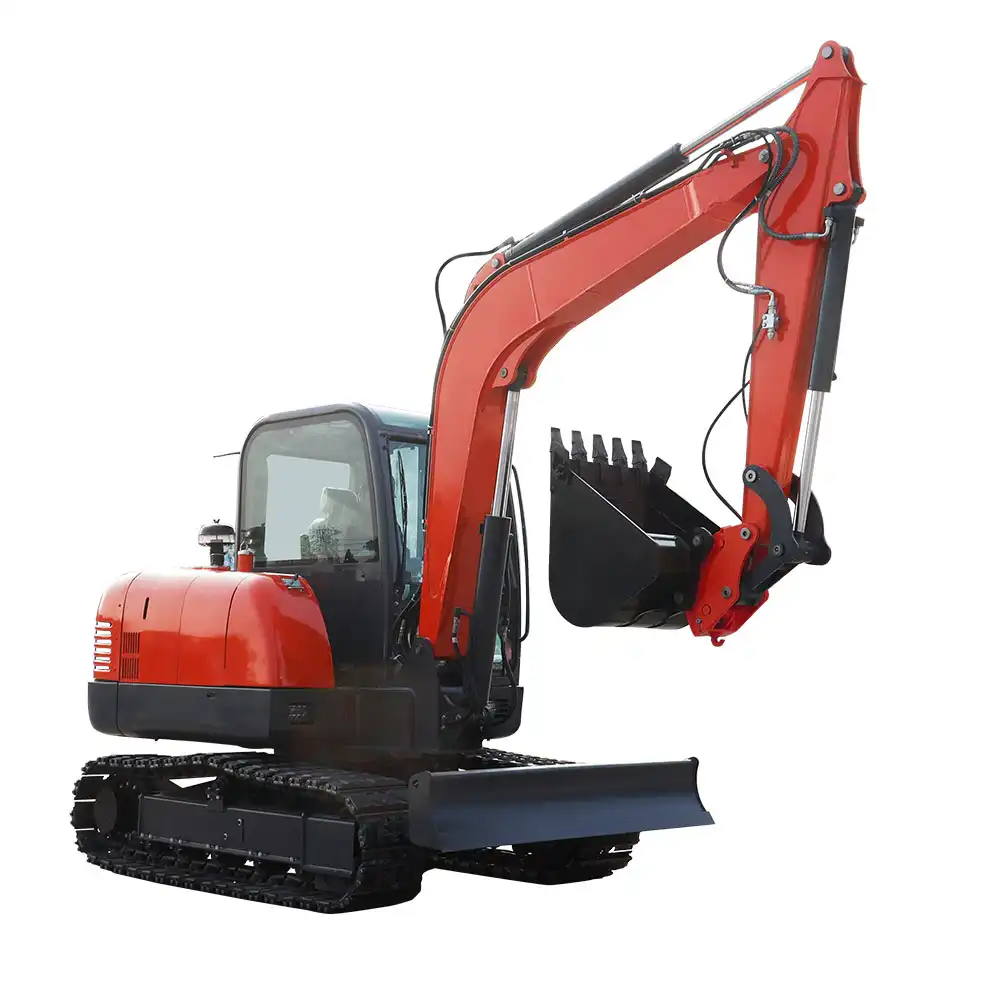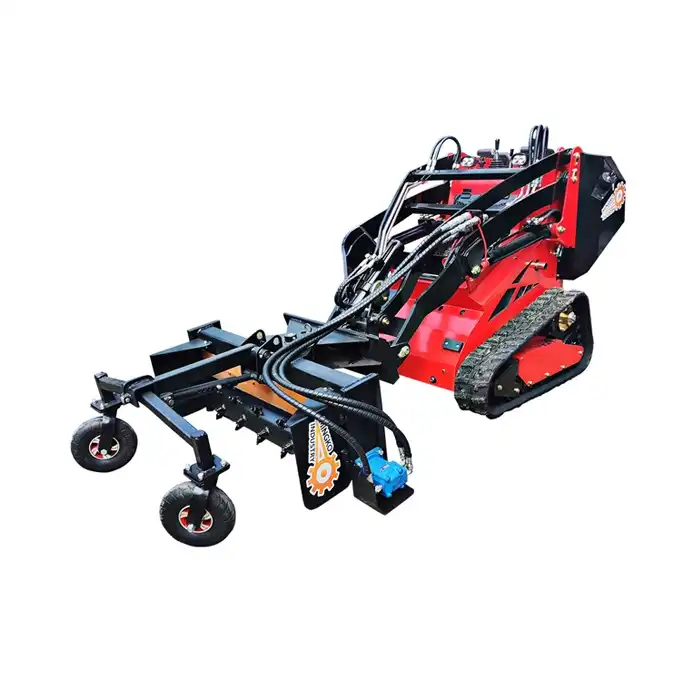
Mini Skid Steer Trencher Buying Guide for Contractors
Choosing the best small Mini Skid Steer Trencher becomes essential for project success when contractors want effective trench digging solutions. When purchasing trenching equipment, construction professionals may easily browse through important features, specs, and concerns with the aid of our thorough buying guide. For utility installation, landscaping projects, and pipeline trenching applications, maximum performance is ensured by knowing hydraulic power needs, cutting depths, and compatibility with different skid steer models.
Understanding Mini Skid Steer Trencher Applications
There are many uses for trenching machines in the landscaping and construction sectors. These adaptable add-ons turn ordinary Skid Steer Loaders into strong earthmoving machinery that can precisely excavate dirt. Compact trenchers are essential to utility companies' cable laying operations. Technicians can install fiber optic cables, electricity lines, and communication equipment without disturbing the surrounding landscapes because to the tiny trenching capabilities. The accuracy these digging attachments provide while navigating around existing utilities is valued by municipal contractors. Hydraulic trenchers are used by landscaping experts to establish irrigation systems. Clean trenches ideal for sprinkler lines, drainage systems, and ornamental water features are produced by the controlled cutting process. The speed and precision these machines provide during site preparation stages is advantageous to real estate developers. Strong trenching solutions are necessary for pipeline construction projects. Heavy-duty trenchers maintain uniform trench dimensions while handling a variety of soil conditions. These portable trenchers are very useful for utility connections and foundation drainage for construction teams working on residential complexes.
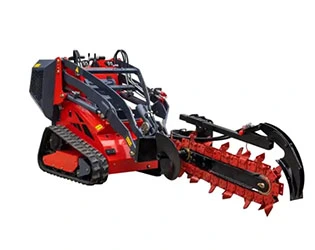
Key Features to Evaluate in Trenching Equipment
Productivity and project results are directly impacted by performance requirements. Verifying compatibility before to purchasing is crucial since various Mini Skid Steer Trencher models have drastically varied hydraulic flow needs. Excavation efficiency and component lifespan are determined by cutting chain technology. Carbide-tipped teeth on premium chains are designed to cut aggressively through rocky terrain. Chain tensioning systems provide good cutting performance over long operating periods with little maintenance. Both operator comfort and accuracy are impacted by depth control techniques. Hydraulic depth adjustment devices are included into advanced models, enabling real-time adjustments without pausing excavation. Although they restrict operational flexibility, manual depth settings are sufficient for reliable trenching operations. Systems for managing waste have an impact on the efficiency and cleanliness of construction sites. While rear-discharge devices are more suited for cramped locations, side-discharge layouts perform well in wide regions. Certain trenchers include movable spoil deflectors that guide the positioning of excavated material. Reliability and maintenance needs are impacted by drive system design. Direct-drive setups provide instantaneous power transmission while doing away with the complexity of gear reduction. Although chain-driven systems are known to be durable, they need to be adjusted and lubricated on a regular basis.
Sizing Considerations for Different Project Types
On different project locations, trencher size has an impact on both capability and mobility. In residential settings where equipment access is restricted by space, compact versions perform very well. During operation, the distribution of weight affects the stability of the skid steer. Counterbalancing considerations are necessary with heavier attachments, particularly when operating on uneven or sloping terrain. When equipment is mismatched, machine tipping creates a safety risk. The installation requirements determine the trenching width. The expense of rehabilitation and material displacement are reduced by narrow trenches. Larger utility bundles may be accommodated by wider ditches, although doing so requires more effort and backfill. Operator positioning freedom and operating envelope are determined by boom reach. Without moving the base machine, extended reach versions enable trenching nearer to buildings. For harsh soil conditions, shorter boom layouts provide more structural stiffness.
Hydraulic System Requirements and Compatibility
The capabilities of the host machine must match the hydraulic power standards. Reduced cutting speeds and early component wear are the results of inadequate flow rates. Sensitive hydraulic components might be harmed by excessive pressure. Generally, depending on trencher size and cutting circumstances, flow needs fall between 15 and 35 gallons per minute. Faster chain speeds and better cutting performance in difficult soils are made possible by high-flow systems. Cutting force and system durability are impacted by pressure ratings. Higher pressures may be needed for heavy-duty applications, although standard systems function between 2,500 and 3,500 PSI. During stopped situations, pressure relief valves shield components from harm. Quick-connect couplers save downtime and make attachment adjustments easier. When making connections, flat-face couplers guard against contaminating the hydraulic fluid. Fittings that are color-coded reduce damage and connection mistakes. Manufacturers and models have different case drain requirements. While some Mini Skid Steer Trenchers use tank return connections, some need special case drain pipes. Appropriate case drain size prolongs component life and guards against bearing damage.
Safety Features and Operational Considerations
Operators and onlookers are shielded from moving parts by chain guards. Complete enclosure designs keep cutting processes visible while preventing debris ejection. Quick-access panels make it possible to do maintenance without removing the guard entirely. In the event of an emergency, emergency stop devices allow for instant chain stoppage. During maintenance, hydraulic lockout valves guard against unintentional activation. Job site safety is increased and accident risks are decreased with clear operating procedures. Improved visibility aids operators in avoiding subterranean utilities and tracking cutting progress. Cutting zones are clearly visible via the sight ports of chain guards. Low-light visibility is enhanced by LED lighting systems. For best performance, groundbreaking equipment need to be used using certain approaches. Maintaining cutting effectiveness while preventing excessive wear is possible with proper chain speed control. Operators can choose the best cutting techniques by having a thorough understanding of the soil conditions.
Maintenance Requirements and Cost Considerations
The expense for the Mini Skid Steer Trencher is chain maintenance. Frequent sharpening prolongs chain life and preserves cutting efficiency. Operating procedures and soil conditions affect replacement schedules. Frequent filter replacements and fluid changes are part of hydraulic system maintenance. Maintaining maximum performance and preventing component wear are two benefits of clean hydraulic fluid. Systems that are contaminated are less effective and break down sooner. Although manufacturer-specific schedules differ, bearings usually need to be lubricated every 50 to 100 operation hours. Proper lubrication prolongs attachment life and avoids expensive bearing replacements. Long-term operational expenses are impacted by wear part availability. Hydraulic seals, driving sprockets, and cutting teeth are often replaced parts. Parts that are easily accessible save maintenance costs and downtime. Requirements for storage safeguard investments when they are not in use. Corrosion and component deterioration are avoided with clean, dry storage. Hydraulic seal integrity is maintained by periodic operation during storage.
Choosing the Right Manufacturer and Support
Equipment lifetime and dependability are directly impacted by manufacturing quality. Superior goods and support services are usually provided by well-established businesses with a solid track record. Manufacturers' warranties differ greatly from one another. Extensive warranties provide predictable repair costs while providing protection against flaws. For applications with intensive use, extended warranty options provide further protection. Operating expenses and equipment uptime are impacted by the availability of parts. Faster parts delivery and technical help are usually offered by manufacturers with large dealer networks. In cases involving troubleshooting and repairs, the quality of technical assistance becomes vital. Support employees with knowledge can identify issues fast and provide workable solutions. With the use of systematic training programs created especially for professional machinery operation, operators may maximize equipment performance while minimizing wear and damage. Operators may better grasp safe operating procedures, load limitations, and proper handling skills under a variety of working scenarios with the support of proper teaching. By implementing appropriate operating practices, machines operate more smoothly and have fewer mechanical problems, increasing productivity and prolonging component life. Skilled operators are able to see early defect indicators, enabling preventative maintenance before significant harm is done. Regular training eventually lowers maintenance expenses, saves downtime, and guarantees that equipment operates dependably on challenging construction sites.
Conclusion
Selecting the appropriate mini skid steer trencher requires careful evaluation of project requirements, hydraulic compatibility, and operational demands. Contractors who invest time in understanding these critical factors typically achieve better productivity and lower operating costs. Quality equipment from established manufacturers provides reliable performance and comprehensive support throughout the equipment lifecycle. Proper maintenance and operator training maximize investment returns while ensuring safe, efficient trenching operations across diverse applications.
Partner with Mingko Industry for Premium Trenching Solutions
Mingko Industry stands as a trusted mini skid steer trencher manufacturer with over 15 years of proven expertise in heavy-duty construction machinery. Our engineering team delivers innovative trenching attachments designed for demanding contractor applications. Contact our specialists at sales@mingkomach.com to explore customized solutions meeting your specific project requirements and budget considerations.
References
1. Thompson, R. & Martinez, J. "Hydraulic Attachment Systems for Compact Construction Equipment." Construction Machinery Engineering Journal, 2023.
2. Anderson, K. "Trenching Technology Advances in Modern Earthmoving Applications." Heavy Equipment Today, 2023.
3. Wilson, P. "Safety Protocols for Skid Steer Attachment Operations in Construction Environments." Occupational Safety Review, 2022.
4. Brown, S. & Davis, L. "Comparative Analysis of Trenching Equipment Performance in Various Soil Conditions." Geotechnical Engineering Quarterly, 2023.
5. Roberts, M. "Maintenance Best Practices for Hydraulic Construction Attachments." Equipment Management Magazine, 2023.
6. Chen, H. "Economic Impact Analysis of Trenching Equipment Selection for Utility Installation Projects." Construction Economics Review, 2022.