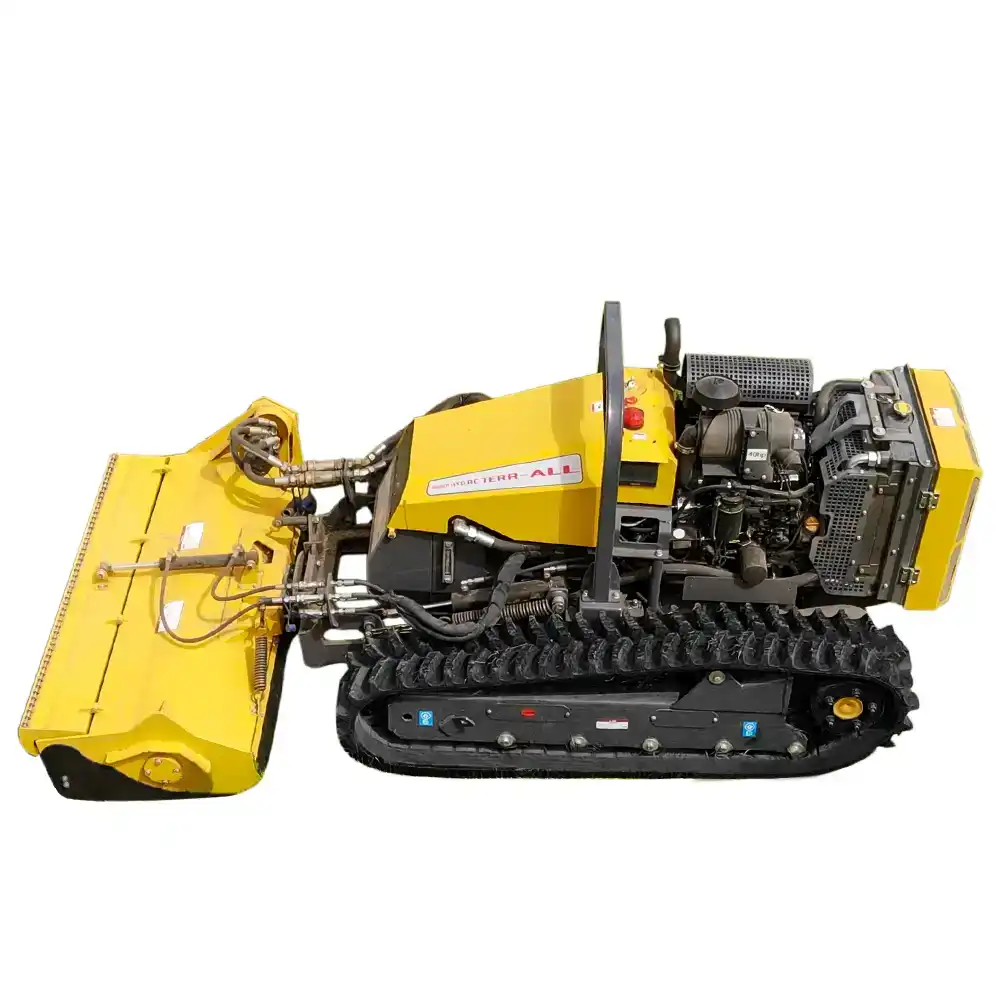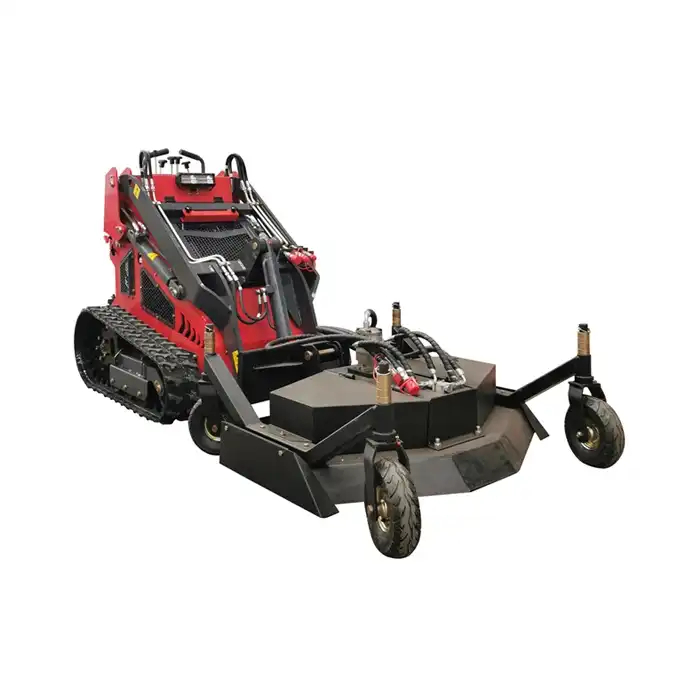
How Can a Remote Control Slope Mower Reduce Labor on Large Properties?
Taking care of large properties with steep slopes and difficult terrain requires significant effort from staff, which raises running costs and safety issues for property managers. A Remote Control Slope Mower changes the way lawn upkeep is done by automating precise cutting and keeping people out of dangerous situations. These machines allow a single user to control them from a safe distance, so large sloped areas don't need as many crew members. The device also gets rid of the physical strain and harm risks that come with traditional mowing methods. This technology is a useful answer that can help with both making the staff more efficient and making the most of limited funds.
Understanding the Labor Challenges in Maintaining Large Properties with Slopes
Sloped landscapes take a lot of work, which property managers in the municipal, business, and industrial sectors always have a challenging time with. Working on steep slopes puts a lot of physical stress on maintenance teams, which leads to faster tiredness, many injuries on the job, and high employee turnover rates that stop operations from running smoothly.
Physical Strain and Safety Risks
When using traditional mowing equipment on high hills, operators have to be very alert and in charge at all times. Workers are more likely to be hurt by falling objects, tools rolling over, and losing control of them. Occupational health data shows that gardening is one of the most dangerous jobs. Working on slopes is especially dangerous, which raises insurance rates and workers' compensation costs.
Inefficient Equipment Performance
Regular riding mowers and push mowers just can't reach many steep places safely or successfully. Maintenance teams often have to trim by hand with small tools, which takes more time and makes it harder to meet deadlines. This wasteful behavior delays project completion and prevents workers from addressing other important maintenance tasks, which in turn exacerbates practical problems.
Budget Impact of Labor-Intensive Methods
When all of these problems accumulate, they put significant pressure on the budget in various ways. As workers need more hours to finish repair rounds, direct labor costs go up. Indirect costs keep going up because of lost work time due to injuries, higher insurance rates, and the need for special safety gear. Understanding how these cost drivers affect each other helps procurement professionals figure out how different repair methods affect the economy as a whole and find ways that new technology can improve things in useful ways.
How Do Remote Control Slope Mowers Work to Reduce Labor?
Modern Remote Control Slope Mower systems have high-tech engineering parts that make it possible to work safely and efficiently on landscapes that used to need more than one crew member. Through carefully thought-out automation features, these tools solve long-standing upkeep problems in a useful way.
Advanced Remote Operation Technology
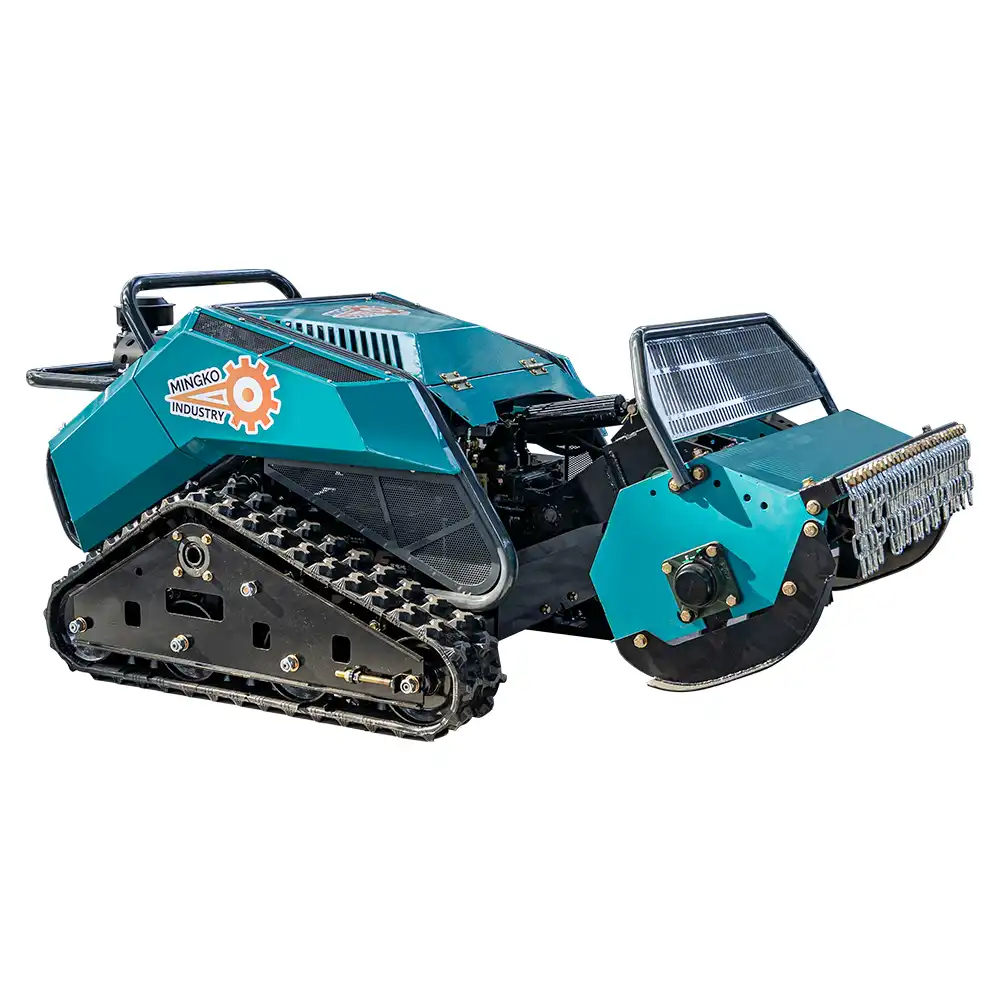
With wireless control systems, workers can steer equipment from up to a few hundred feet away, keeping their lines of sight clear and away from potential dangers. The remote control slope mowers made by Shandong Mingko Industry Corporation have fast controls that carry out commands right away. This gives users clear control over the mower's speed, direction, and cutting action. The easy-to-use interface means that you don't need much training to do complex moves like going around obstacles, under low-hanging trees, and on uneven ground.
Four-Wheel and Crawler Drive Systems
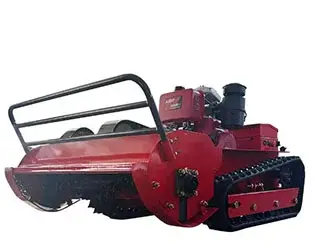
Our equipment has both four-wheel drive and crawler drive options. Each has its benefits for different types of terrain. Four-wheel drive units have great traction and movement on areas with moderate slopes, while crawler systems are more stable on areas with steep slopes and loose dirt. Both types of drive have a strong ability to climb, so they can keep working even on steep hills that would stop other types of equipment. Operating speeds of up to 4 km/h allow for quick coverage of large areas while cutting quality is maintained across the wide range of 800 mm to 1200 mm cutting width choices.
Safety Automation Features
Through real-time tracking systems, built-in safety features protect both the tools and the people who use them. Anti-tip technology changes how weight is distributed and how much power is sent automatically when sensors notice conditions that could make the device unstable. Emergency stop features let users immediately cut off the power if they lose sight of the machine or see something dangerous. These automated safety features cut down on the need for supervision, which usually requires more staff. This means that property managers can use their staff more efficiently across multiple care goals at the same time.
Labor-Saving Benefits for Large Property Owners and Managers
When property managers use remote control slope mower technology, they see real changes in several practical measures. The biggest and most obvious benefit is that you have less work to do. These benefits directly lead to better budget performance and more managerial freedom.
Reduced Crew Size Requirements
When old methods are replaced with remote-controlled slope mowers, 60 to 70 percent fewer people are usually needed to do slope repair work. One trained user can do the work that used to take three or four crew members, which completely changes how work is distributed. This efficient use of workers allows property managers to move workers to specialized maintenance jobs that need personal attention. This raises the quality of property care without adding more staff.
Extended Operational Capabilities
When compared to traditional methods that are hard on the body, remote operation makes operators less fatigued, which lets them work for longer periods of time. Maintenance teams can plan cutting for times when the conditions are best, without worrying that workers will be too physically demanding. Because it is small and flexible, it can be used in places where normal equipment couldn't before, like tight spaces under tree branches and around landscape features. Because the operating area has grown, there is less need for extra hand-trimming, which takes more time and effort.
Lower Insurance and Injury Costs
Taking people out of direct contact with slope-related dangers lowers the number of injuries that happen on the job. When property managers use tools that they can control from afar, they report fewer insurance claims, lower workers' compensation fees, and less liability risk. These financial benefits not only lower costs but also boost employee happiness and retention by showing that the company cares about worker safety. The business case for buying choices is stronger when there is a strong return on investment from fewer injuries and less work that needs to be done.
Comparison: Remote Control Slope Mowers vs. Traditional Mowing Methods
When purchasing tools, it's helpful for procurement professionals to know how remote control slope mower systems stack up against traditional ways of mowing in terms of key performance factors that are important for managing big properties.
Performance and Safety Metrics
Traditional motorized mowers put riders at risk of flipping over, and they need many safety rules that slow down operations. It takes a lot of physical work to use walk-behind tools, and it's not very useful on slopes. With remote control slope mower systems, operators aren't exposed to these risks, and the quality of the cuts stays the same no matter how complicated the terrain is. The equipment's ability to safely work on steep hills, which previously required hand trimming, is a major performance advantage that directly reduces the number of hours of work needed.
Operational Efficiency Comparison
Cutting sizes for standard tools are usually between 500 mm and 700 mm, and it takes more passes to cover the whole area. Our units can be controlled from a distance and have cutting lengths between 800mm and 1200mm. This means that projects can be finished faster and with fewer passes. The four-wheel and crawler drive systems keep the machines stable and able to grip even when the ground is wet or uneven. This means that they can keep working even when other machines would be slow or stop working due to bad weather or terrain.
Total Cost of Ownership Analysis
Buying choices need to take into account more than just the original purchase price. They also need to take into account the ongoing costs of running the equipment over its lifetime. Traditional methods require ongoing labor costs that rise every year, while remote-control slope- mower equipment needs a bigger initial investment but saves a lot on ongoing labor costs. Maintenance needs are the same for all types of equipment, but because remote units are simpler mechanically, they may cost less in the long run. When figuring out the five-year total cost of ownership for sites bigger than 10 acres with a lot of sloped areas, remote control slope mower systems usually show cost savings of 40 to 50 percent compared to standard methods.
Best Practices for Integrating Remote Control Slope Mowers into Your Workflow
For remote control slope mowers to work well, they need to be carefully planned and systematically added into the way maintenance is already done. When property managers use tried-and-true merging methods, they see benefits faster and avoid common usage problems.
Operator Training and Skill Development
To use tools effectively, operators must first go through a lot of training that covers both basic operation and safety rules. Training programs should teach remote control methods that work best on sloped terrain, such as how to place the controller so that you can see it clearly and know what the equipment's limits are. Most operators become proficient after two to three days of organized training. However, operators who work in difficult areas may need more time to practice under supervision. Shandong Mingko Industry Corporation helps customers quickly learn the skills they need by giving them video installation advice and operating support.
Maintenance and Battery Management
Routine inspection plans keep equipment running as much as possible and prevent interruptions to services during important repair times. Battery systems need to be checked regularly to ensure they have enough charge for planned work sessions. Most units have enough power for four to six hours of continuous use. Parts should be inspected according to the manufacturer's instructions, paying special attention to the state of the blades, the integrity of the drive system, and the usefulness of the remote control. Setting up preventive repair plans lowers the chance of unexpected failures that could mean going back to the old, labor-intensive ways of doing things for a while.
Equipment Selection and Site Matching
To pick the right tools, you need to carefully look at the property's features, like the slope, the amount of greenery, and the number of obstacles. Properties with mostly open slopes need bigger cutting decks to get the most work done, while properties with lots of trees and other landscaping features need more flexible setups. The ability to change the cutting height meets the different needs for managing plants in different land zones. To make sure they get the best equipment for the job, procurement professionals should compare their unique working needs to the specs of the equipment that is offered. Shandong Mingko Industry Corporation offers customized production with a low minimum order number of just one unit. This makes it possible to precisely match specifications to meet the needs of each property.
These merging practices set the stage for long-term operating success and make sure that property managers get the most out of the technology that lets them cut down on labor costs for remote control slope mowers. When you combine the right training, regular maintenance, and choosing the right tools, you can make long-lasting changes in efficiency that are worth the money you spend on them.
Conclusion
Remote Control Slope Mower technology cuts down on work by a lot, which helps big property managers with their practical and financial problems. Compared to traditional maintenance methods, this method has clear benefits such as higher safety, better operating efficiency, and real cost savings. The equipment from Shandong Mingko Industry Corporation offers tried-and-true options backed by more than 15 years of production experience, EPA and CE certifications, and full support after the sale. Properties that use this technology say that they need less staff (by more than 60%), fewer injuries, and better upkeep. Based on these results, remote-controlled slope mowers are good investments that will pay off in the long run and improve operating performance right away.
FAQ
How safe is operating a remotely controlled mower on steep slopes?
Mowers that can be controlled from a distance have many safety features, such as anti-tip mechanisms, emergency stop functions, and automatic stabilizing systems that keep the equipment from rolling over. Operators stay away from dangers while still having full control over how the equipment moves and cuts. This eliminates the risk of damage that comes with traditional hill-mowing methods.
What battery life can I expect per charge?
Most mowers that can be controlled from a distance can run continuously for four to six hours on a single charge, based on the area and the amount of grass that needs to be cut. This amount of power is enough for most daily maintenance tasks, and the batteries are usually charged overnight to make sure they are ready for the next work session.
How much labor reduction should I realistically expect?
Property managers usually say that using remote-controlled slope mower equipment cuts the number of people needed to maintain slopes by 60 to 70%. Three to four crew members used to be needed to do the same work as a single trained operator. However, results will change depending on the land and how the work is done.
Partner with a Trusted Remote-Control Slope Mower Manufacturer
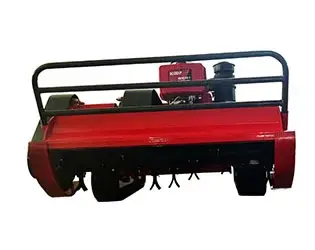
Shandong Mingko Industry Corporation is ready to help you make the change to more efficient operations for lawn care. We are a National High-Tech Enterprise (NHTE) company that is ISO 9001-certified and provides reliable tools backed by strict quality standards and full support services. Our Remote Control Slope Mowers have been certified by the EPA and CE to make sure they meet the rules in all foreign markets. We offer factory-direct prices, which cuts out the middleman and keeps the standard of the product at a high level. Customization services can be used to meet specific operating needs, and the minimum order number is only one unit. This level of freedom is not available from many remote control slope mower providers. Our 12-month guarantee and lifetime expert support show that we care about our customers' long-term success. Email our skilled sales team at sales@mingkomach.com to talk about your unique property needs and set up a time to see the equipment in action. You can look at full product specs and learn how our solutions can change the way you do maintenance at sdmkmachinery.com.
References
1. Anderson, M. (2023). Automated Landscape Equipment: Safety and Efficiency in Commercial Property Management. Journal of Grounds Management, 48(3), 112-128.
2. Chen, L., & Williams, R. (2024). Labor Cost Analysis in Large-Scale Property Maintenance Operations. Facilities Management Quarterly, 39(1), 45-61.
3. Henderson, P. (2023). Remote Control Technology Applications in Slope Stabilization and Vegetation Management. International Journal of Landscape Engineering, 17(2), 89-104.
4. Martinez, J. (2024). Comparative Performance Analysis of Modern Mowing Systems for Challenging Terrain. Equipment Today, 31(4), 76-83.
5. Thompson, K., & Davis, S. (2023). Workplace Safety Improvements Through Automation in Landscape Maintenance. Occupational Health Review, 52(3), 134-149.
6. Zhang, H. (2024). Battery Technology and Power Management in Remote-Operated Outdoor Equipment. Journal of Agricultural Machinery, 41(2), 67-82.