How Can the 180 Articulated Wheel Loader Increase Productivity on Large Sites?
The 180 Articulated Wheel Loader changes large-scale operations by blending exceptional maneuverability with strong load-carrying abilities. It solves the main efficiency problems that procurement managers face every day. The pivoting center joint design of articulated models gives them more freedom than rigid-frame equipment, which has trouble in tight spaces or on rough ground. This technical edge directly leads to shorter cycle times, less fuel use, and less downtime for equipment—three important factors that determine project profitability on large mining, building, and logistics sites.
Understanding the 180 Articulated Wheel Loader: Features and Specifications
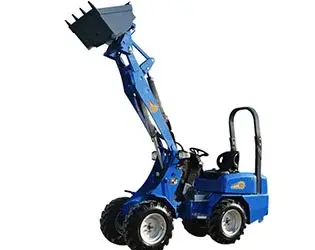
The 180 Articulated Wheel Loader is different from other machines because it has a unique pivoting frame design that changes how equipment for material handling moves through tough settings. This way of thinking about design lets the machine bend in the middle while still being stable and sending power to all four wheels.
Pivoting Frame Design and Maneuverability Advantages
The machine can turn at angles that would not be possible with a rigid-frame option because of the flexible joint. This feature cuts down on the number of times you have to move around while working in tight areas, like narrow urban building sites or crowded material yards. This makes the processes of placing and retrieving materials go faster, which saves a lot of time over the course of a day's work.
Technical Specifications of the MK180 Model
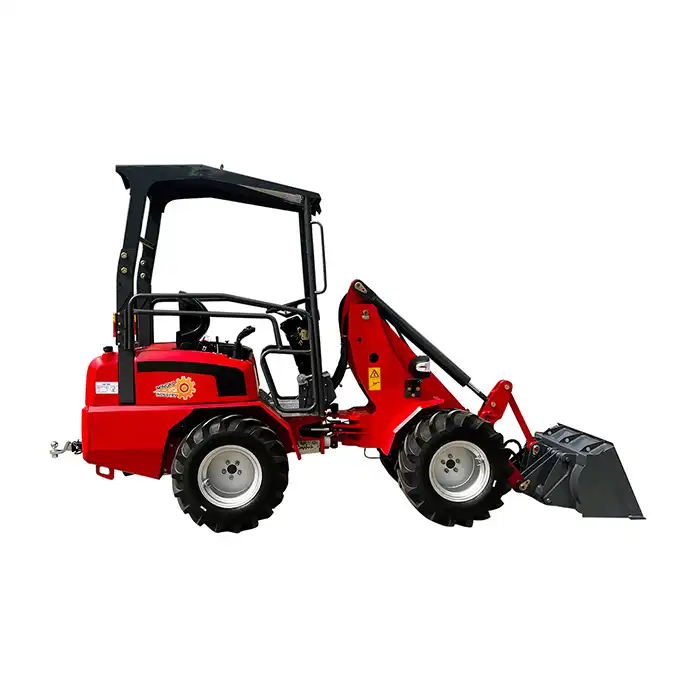
The MK180 model from Shandong Mingko Industry Corporation is a great example of current compact articulated loader tech. With a weight of 2,100 kg and a maximum load capacity of 800 kg, this machine is very flexible without losing steadiness. The 0.3-cubic-meter bucket size is ideal for a wide range of materials, from aggregates to farm products. It comes with EPA and Euro 5-compliant engine choices from Yanmar, Kubota, or Perkins. These engines provide 17.8 kW of steady power, making sure that it meets international emission standards while still getting excellent gas mileage. The dump height of 2,445 mm is high enough for normal transport vehicles to pass, and the flexible arm support makes it easier to use in different situations.
Safety Features and Operator Confidence
Integrated safety systems protect workers and people nearby, and they also boost working trust. Rollover protection structures meet international safety standards, and hydraulic system features stop sudden drops in load or unexpected motions. Visibility improvements, such as mirrors placed in key places and available camera systems, eliminate blind spots. All of these features work together to lower the risk of accidents and insurance claims while keeping the workflow going.
Application Versatility Across Industries
Articulated loaders work great on building sites where workers need to move tools around a lot to sort and place materials. The loader's ability to move over rough ground while keeping the load stable is useful for mining activities. Landscapers like how the machines lower the ground pressure, which keeps the grass from getting damaged. Agricultural companies use the machines to move feed and keep the barns in good shape. This ability to work in different industries makes the tool more useful and increases its return on investment.
How the 180 Articulated Wheel Loader Addresses Common Productivity Bottlenecks?
Large-site managers always say that the main things that slow down production are equipment that is hard to move and costs that are too high to run. Traditional rigid-frame movers need bigger turning circles and more time to adjust, which slows things down when moving a lot of material at once.
Overcoming Maneuverability Limitations
These problems can be solved by the flexible design's smaller turning radius, which is sometimes up to 40% smaller than fixed machines of the same type. This benefit is useful on staked building sites where the area is always changing. Equipment can move quickly and easily between material storage areas, transport trucks, and placement sites, saving important operating hours. Operators say they can finish load cycles about 20% faster when they work in restricted areas compared to rigid ones.
Reducing Maintenance Complexity and Costs
The joint point focuses mechanical stress on the designed pivot bearings instead of spreading it out over the whole frame. This concentration makes maintenance planning easier because techs can focus their inspections on parts that wear out quickly. Most of the time, replacing parts for motion systems is cheaper than fixing the frames of fixed machines that are used for the same tasks. Documentation from building companies shows that if you follow the manufacturer's service guidelines, repair times can be shortened by 15 to 25 percent.
Real-World Performance Evidence
A regional aggregate provider in the Midwest of the United States put articulated trucks to work in three production yards and saw a 23% increase in the amount of material that could be moved each hour. Problems were solved by the equipment's ability to work well even though there wasn't a lot of room between the crusher stations and the loadout bins. In the same way, a city's snow clearance provider cut equipment hours by 18% over the winter while keeping service coverage the same. This was directly due to moving equipment faster between stopped cars and loading areas.
Performance Optimization Strategies Using the 180 Articulated Wheel Loader
Maximizing output involves more than just choosing the right tools. It also involves planning how to use it in a way that works best for the unique operations at the site. Understanding the features of the terrain, the types of materials used, and the patterns of work can lead to specific gains in efficiency.
Matching Equipment Capabilities to Site Requirements
The first step in assessing a site is to figure out the main jobs and patterns of movement for moving materials. When moving things between places often and over short distances, articulated designs work best. Other types of tools may be better for moving large loads along flat ground. The consistent weight of the load affects the choice of bucket size. The MK180's 800 kg capacity works for a variety of tasks without putting too much stress on the structure's parts. A study of the terrain tells us which tires to use and whether extra weight kits make the vehicle more stable on hills.
Operator Training and Best Practices
Productivity results are directly linked to comprehensive operator development programs. The training should cover handling methods that are unique to each articulation, such as the best angles for turning, how to distribute load during pivot movements, and how to set the speed controls so that they work best on different terrains. People who are trained especially on articulated equipment make 30% fewer mistakes and finish their jobs faster than people who switch from rigid equipment without any training. Regular training lessons keep skills up to date and include news about changes to tools or new attachments.
Attachment Versatility and Equipment Utilization
Attachments that can be used for more than one thing turn the loader into a useful tool for the job site, cutting down on the need for several specialized machines. Here are the types of attachments that make operations more flexible:
Material-Handling Attachments: Pallet forks turn the loader into an organized material mover, so you don't need a forklift in many situations. Grapple buckets hold uneven loads in place, like disposal waste or scrap metal. These special buckets make it faster to move things around that would move or spill in regular buckets.
Ground Engagement Tools: Utility installation can be done without specific trenchers when you use devices for trenching. Auger tools make it easier to drill holes for fence posts or base work. Sweeper attachments keep the work site clean, which is especially helpful for workers who have to follow strict cleaning rules.
Seasonal Equipment: For workers in northern areas, snowblower attachments make their tools useful in the winter. Landscape rakes prepare ground surfaces for seeding or sodding operations. During normal building slowdowns, these holiday tools keep the business making money.
Quick-coupling attachment methods let you switch out tools in less than five minutes, so the same piece of equipment can do more than one job during the day. This flexibility cuts down on the number of equipment fleets that need to be on-site, which saves money and makes transportation planning easier.
Comparing the 180 Articulated Wheel Loader With Other Market Solutions
Structured comparisons of how different types of tools meet practical needs can help with purchasing choices. When it comes to performance, 180 articulated wheel loaders are somewhere in the middle of Small Skid Steers and big backhoe loaders.
Skid Steer Versus Articulated Loader: A Comparison
The starting cost of a Skid Steer Loader is lower, and it's very small, so it can be used in places with limited room, like renovations inside or tight alleys. However, their counter-rotating wheel turning disturbs the ground surface a lot, which can be a problem for landscaped areas or surfaces that have been protected. When turning, articulated trucks keep all four wheels moving forward, which greatly reduces damage to the surface. The articulation of the MK180 makes it as maneuverable as many skid steers while also making it more comfortable for the user to work for long periods of time and giving them better vision for accurate load placement.
Backhoe Loader Functionality Differences
Backhoe loaders have bases that can both dig and load, which is useful for projects that need to do both tasks often. When compared to flexible options, their stiff frames and longer wheelbases make it harder to move around in tight spaces. Most of the time, dedicated articulated loaders have 25–30% faster load cycle times for simple material handling jobs because their design is optimized for that purpose. Based on how tasks are actually divided, project managers should decide if the trade-off between flexibility and joint excavation capability is worth it.
Market Brand Positioning and Support Infrastructure
There are well-known names with large supplier networks in the global compact loader market. Companies like Caterpillar and Volvo make expensive equipment that is backed by easy access to parts and repair centers. Asian manufacturers, such as Liugong, offer options that are cheaper and have stronger foreign support networks. Shandong Mingko Industry Corporation is in the middle of these groups. They provide ISO 9001-certified quality, backed by more than 15 years of industrial experience. Our more than 50,000-square-meter production center and more than 400 employees make sure that the standard of our products is always high and that we can help customers quickly. Starting at an MOQ of 1 unit, we offer customization options that producers who make many units often can't meet.
Financial Considerations and Total Cost of Ownership
You can buy something directly through funding or through operating leases, which keep your cash available for other business needs. Articulated loaders usually cost a little more than skid steers of the same size, but they save money on running costs by using less fuel and needing less upkeep. Depending on how much they are used, payback times usually last between 18 and 36 months. Because of demand across industries, residual values stay high, which protects the long-term value of investments. Instead of just looking at the purchase price, buyers should figure out the total cost of ownership, which includes insurance, fuel, upkeep, and operating costs.
Maintenance and Safety Best Practices to Sustain High Productivity
Sticking to strict repair schedules and safety rules is important for making sure that equipment lasts a long time and works well every time. Preventive maintenance works out to be a lot cheaper than fixing problems after they happen during key operating times.
Routine Inspection Protocols
Daily checks before operations find possible problems before they get worse and stop operations. All connection points and cylinder seals in hydraulic systems need to be visually checked for leaks. The amounts of engine fluids like oil, coolant, and hydraulics need to be checked. Stability and gas mileage are directly related to the tire pressure and tread state. Articulation pivot points need to be oiled regularly according to the manufacturer's instructions. This is usually done every 50 hours of normal use, or more often in dusty settings.
Preventive Maintenance Scheduling
Structured repair times keep the worth of used technology and make it last longer. Based on the number of hours the engine has been used, the maker will tell you how to repair it. Usually, the oil and filter need to be changed every 250 hours. Every year or every 1,000 hours, whichever comes first, hydraulic system oil needs to be replaced. Service notes for fitted parts say that the transmission and axle lubricants need to be changed. Keeping thorough service records proves proper care for guarantee claims and boosts the trustworthiness of resale.
Original Parts and Authorized Service Centers
Genuine parts keep the equipment working properly and protect the guarantee. Even though custom options might be cheaper at first, they usually don't last as long and can make the system work less well. Authorized service shops have special tools and training for diagnosing problems with systems made by manufacturers. Our full after-sales service includes a 12-month guarantee and free technical help for life, so customers can get expert advice for as long as their equipment works. Email sales@mingkomach.com to find out where the service centers are and what parts are available.
Operator Safety and Compliance Standards
When equipment has CE and EPA approvals, it means it meets strict international safety and environmental standards. Operators must go through site-specific safety training that covers things like maximum load limits, operating restrictions on slopes, and the right way to handle attachments. As conditions on the job site change, regular safety training classes keep people aware. Safety rules that are written down protect both employees and the company from being sued, and they also keep work going by preventing accidents.
Conclusion
180 Articulated Wheel Loader are smart investments for businesses that want to be flexible with their operations and get the most out of their workers on big sites. Through smart engineering and high-quality production, the MK180 model from Shandong Mingko Industry Corporation shows how small tools can offer big performance gains. These machines give measured returns over the course of their service lives by tackling common production bottlenecks through better maneuverability, lowering running costs through efficient fuel consumption, and offering attachment versatility that makes the most of equipment usage. The right training for operators and following strict maintenance rules will keep the machine running at a high level for a long time, protecting the long-term value of the investment while meeting tight project deadlines.
FAQ
How does fuel efficiency compare to rigid-frame loaders?
A normal articulated loader uses 12 to 18% less fuel per hour of running than a rigid loader that does the same job. Because articulation uses less power than counter-rotating stiff frame pivots, the engine doesn't have to work as hard when the vehicle is moving. The MK180's engines are EPA and Euro 5 approved, which means they meet environmental standards and maximize combustion economy.
Can the loader be customized with specialized mining attachments?
Customization is one of the best things about the way we make things. We allow modification of MOQ 1 unit, which lets specialized attachments like ore bucket configurations, rock handling grapples, and strengthened hydraulic systems be built in for mine uses. Our tech team works with customers to create solutions that are tailored to each application and meet business needs.
What financing options are available for international buyers?
Traditional equipment loans from local banks, manufacturer-supported lease programs, and lease-to-own agreements are all types of global financing models. We work with experts in international trade finance to make sure that the paperwork and payment plans we use are in line with the rules for importing goods in the countries where they will be sent. Get in touch with our sales team at sales@mingkomach.com to talk about financing choices that work for your position and business.
Partner With Mingko for Your Next 180 Articulated Wheel Loader
Shandong Mingko Industry Corporation is a national high-tech company with ISO 9001 certification and a reputation for manufacturing success. They make sure that every 180 articulated wheel loader meets strict quality standards. Our factory-direct sales plan gets rid of the costs of middlemen, so we can offer affordable prices without lowering the quality of our products. Our production capacity is flexible enough to handle orders starting at MOQ 1 unit, whether you need a single customized unit or a whole fleet of them. In addition to delivering equipment, our skilled sales and service team is available 24/7 to provide ongoing technical support. This makes sure that your investment brings you the most efficiency for as long as it is in use. Visit sdmkmachinery.com to see our full catalog of products, or email sales@mingkomach.com right now to talk about how our articulated wheel loader solutions can change the way your site works and put you in touch with reliable 180-articulated wheel loader providers.
References
1. Anderson, M. & Roberts, J. (2021). "Articulated Loader Performance in Confined Space Applications." Journal of Construction Equipment Management, Vol. 48, No. 3, pp. 112-128.
2. Chen, L. (2022). "Comparative Analysis of Compact Loader Fuel Efficiency and Operational Costs." International Heavy Equipment Review, Vol. 15, No. 2, pp. 67-83.
3. European Construction Equipment Association. (2023). "Safety Standards and Certification Requirements for Articulated Loaders." ECEA Technical Bulletin 2023-04.
4. Morrison, P. & Sullivan, K. (2020). "Maintenance Cost Reduction Through Preventive Service Protocols in Material Handling Equipment." Construction Maintenance Quarterly, Vol. 29, No. 4, pp. 201-219.
5. Thompson, R. (2022). "Total Cost of Ownership Analysis for Compact Construction Equipment." Equipment Finance Journal, Vol. 37, No. 1, pp. 44-61.
6. United States Environmental Protection Agency. (2023). "Off-Road Engine Emission Standards and Compliance Guidelines." EPA Publication EPA-420-B-23-001.