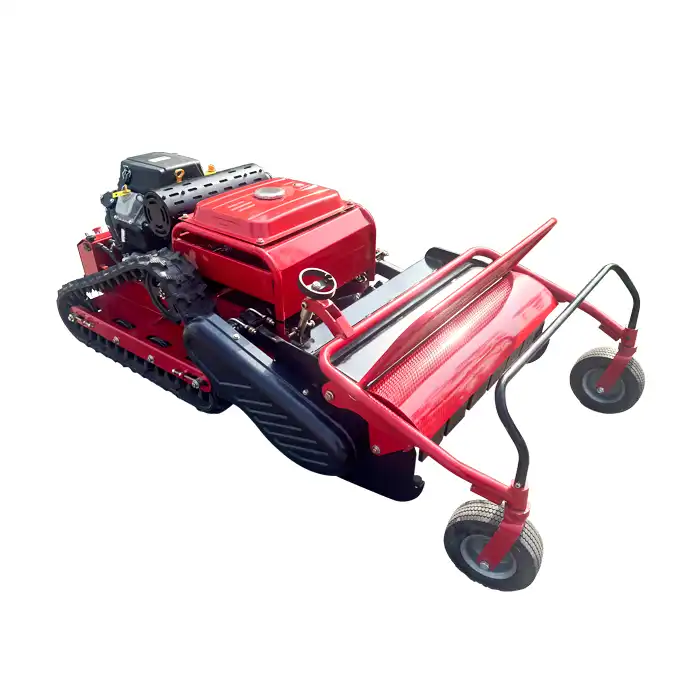
By fusing operator safety with precision cutting capabilities, Remote Control Brush Cutter technology transforms agricultural vegetation management. From crop field care to invasive species control, these self-governing machines provide remarkable efficiency increases in a variety of farming contexts. Significant labor cost savings, increased operational safety, and better land management results are reported by agricultural companies that invest in remote-controlled cutting equipment. For agricultural experts looking to maximize their vegetation management operations with cutting-edge remote control systems, this thorough examination looks at real-world applications, financial advantages, and procurement tactics.
Understanding Remote Control Brush Cutters in Agriculture
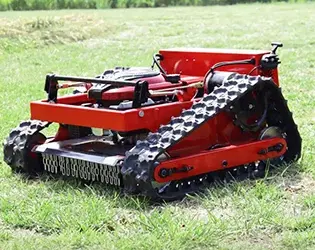
Remote control brush cutting systems represent a paradigm shift in agricultural land management, integrating advanced wireless control technology with robust cutting mechanisms designed for challenging terrain. These machines operate through sophisticated radio frequency systems that enable operators to maintain safe distances while achieving precise vegetation control across various agricultural settings.
Core Technology and Design Features
Modern remote-controlled cutting equipment incorporates high-capacity lithium-ion battery systems, delivering 2-4 hours of continuous operation depending on terrain complexity and vegetation density. The cutting mechanisms utilize hardened steel blades rotating at optimized speeds between 2,800-3,200 RPM, ensuring efficient processing of dense undergrowth, invasive weeds, and overgrown pasture areas. Advanced gyroscopic stabilization systems maintain equipment balance on slopes up to 45 degrees, significantly expanding operational capabilities compared to traditional manual tools.
Operational Benefits in Agricultural Environments
Agricultural operations benefit from substantial labor cost reductions, with remote operation eliminating the need for multiple field workers in hazardous cutting environments. The technology minimizes exposure to airborne allergens, flying debris, and unstable terrain conditions that frequently cause operator injuries. Environmental advantages include reduced noise pollution compared to gas-powered alternatives and zero direct emissions during operation, supporting sustainable farming practices and regulatory compliance.
Use Cases of Remote Control Brush Cutters in Agriculture
Remote-controlled cutting equipment addresses diverse agricultural challenges where conventional methods prove inefficient or unsafe. These applications demonstrate measurable improvements in productivity, cost management, and operational safety across various farming contexts.
Large-Scale Property Management
Extensive agricultural properties benefit from remote cutting technology when managing perimeter areas, drainage channels, and access roads. The equipment efficiently processes overgrown fence lines, maintaining clear boundaries while reducing manual labor requirements by approximately 60-70%. Remote operation enables coverage of 3-5 acres per hour depending on vegetation density, compared to 1-2 acres using traditional handheld equipment.
Specialized Crop Environment Applications
Vineyard and orchard management presents unique challenges where precision and accessibility are paramount. Remote-controlled units navigate narrow row spacing and delicate root zones without soil compaction risks associated with larger machinery. The technology enables selective vegetation management around fruit trees and vine bases, protecting valuable crops while eliminating competing vegetation that reduces yield potential.
Invasive Species Control Programs
Agricultural pest management increasingly relies on remote cutting systems for controlling invasive plant species that threaten crop productivity. These machines effectively process dense stands of kudzu, multiflora rose, and other problematic vegetation in areas where chemical treatment is environmentally inappropriate. Remote operation allows treatment of sensitive riparian zones and organic farming areas while maintaining regulatory compliance.
Evaluating the Return on Investment (ROI)
Financial analysis of remote control cutting equipment reveals compelling economic advantages despite higher initial capital investment compared to conventional tools. The ROI calculation encompasses direct cost savings, productivity improvements, and risk mitigation benefits that accumulate over the equipment lifecycle.
Cost-Benefit Analysis and Labor Savings
Agricultural businesses typically recover initial equipment investment within 18-24 months through reduced labor expenses. Remote operation eliminates the need for 2-3 field workers per cutting project, generating annual savings of $15,000-$25,000 in labor costs alone. Additional savings emerge from reduced workers' compensation insurance premiums, as remote operation significantly decreases workplace injury risks associated with traditional brush cutting activities.
Productivity and Efficiency Improvements
Operational efficiency gains reach 40-50% compared to manual cutting methods, enabling completion of vegetation management tasks in significantly reduced timeframes. The technology allows simultaneous operation of multiple units by a single operator, further amplifying productivity benefits. Reduced equipment downtime through simplified maintenance requirements and improved component durability contributes to sustained operational efficiency throughout seasonal cutting cycles.
How to Choose the Right Remote Control Brush Cutter for Your Agricultural Needs?
Selecting appropriate remote cutting equipment requires careful evaluation of operational requirements, terrain characteristics, and long-term business objectives. Agricultural professionals must consider multiple technical and operational factors to ensure optimal equipment performance and investment value.
Technical Specifications and Performance Criteria
Battery capacity and runtime represent critical selection factors, with agricultural applications typically requiring 3-4 hours of continuous operation per charging cycle. Control range capabilities should extend to at least 150-200 meters to accommodate large property management needs. Cutting width specifications between 16-24 inches provide optimal balance between efficiency and maneuverability in diverse agricultural environments.
Vendor Selection and Support Considerations
Procurement decisions should prioritize manufacturers with demonstrated agricultural equipment expertise and comprehensive customer support infrastructure. Warranty coverage extending 12-24 months with readily available replacement parts ensures sustained operational capability. Technical support accessibility and training programs enable effective equipment utilization and maintenance protocol implementation.
Procurement Insights: Buying and Maintaining Your Remote Control Brush Cutter
Successful equipment procurement requires strategic planning that encompasses initial purchase considerations, ongoing maintenance requirements, and long-term operational support. Agricultural businesses benefit from understanding procurement channels, financing options, and maintenance protocols that optimize total cost of ownership.
Purchasing Channels and Financing Solutions
Direct manufacturer relationships often provide superior value through bulk purchasing programs and customization options tailored to specific agricultural applications. Financing arrangements through equipment leasing programs enable capital preservation while accessing cutting-edge technology. Volume purchasing agreements can reduce per-unit costs by 10-15% for agricultural operations requiring multiple units across extensive properties.
Maintenance Protocols and Parts Availability
Effective maintenance programs focus on battery management, blade replacement schedules, and control system calibration to ensure sustained performance. Regular cleaning protocols remove agricultural debris that can impact mechanical components and radio frequency transmission quality. Parts availability through authorized service networks minimizes downtime risks and maintains operational continuity during critical cutting seasons.
Why Choose Mingko for Your Remote Control Brush Cutter Needs?
Shandong Mingko Industry Corporation brings over 15 years of specialized experience in agricultural machinery manufacturing, operating from a state-of-the-art 50,000 square meter facility in Jining Economic Development Zone. Our remote control brush cutting equipment reflects extensive research and development investment, incorporating advanced control systems with proven cutting technology designed specifically for agricultural applications.
Manufacturing Excellence and Quality Assurance
As an ISO 9001 certified enterprise with National High-Tech certification, Mingko maintains rigorous quality standards throughout the manufacturing process. Our remote control lawnmower production workshop utilizes advanced assembly techniques and comprehensive testing protocols to ensure reliable performance in demanding agricultural environments. Factory direct sales eliminate intermediary markups, providing exceptional value to agricultural businesses seeking cost-effective equipment solutions.
Comprehensive Support and Customization Services
Mingko offers extensive customization capabilities with MOQ 1 unit flexibility, enabling tailored solutions for specific agricultural applications. Our 12-month warranty coverage combined with lifetime technical assistance provides comprehensive protection for equipment investments. Professional sales and service teams maintain 24/7 availability to support customer needs throughout the equipment lifecycle.
Conclusion
Remote control brush cutting technology represents a transformative advancement in agricultural vegetation management, delivering measurable improvements in operational efficiency, cost management, and safety outcomes. The compelling ROI profile, combined with enhanced productivity capabilities and reduced labor requirements, positions this technology as an essential investment for modern agricultural operations. Careful equipment selection and vendor partnership decisions ensure optimal performance and long-term value realization in diverse agricultural environments.
Frequently Asked Questions
Q1: What is the typical battery life for remote control brush cutters in agricultural applications?
A: Battery life ranges from 2-4 hours depending on terrain complexity and vegetation density. Most agricultural models support rapid battery exchange systems, enabling continuous operation with minimal downtime between battery swaps.
Q2: Can remote control brush cutters operate effectively on steep slopes and uneven terrain?
A: Modern units incorporate advanced stabilization systems and low-center-of-gravity designs that enable safe operation on slopes up to 45 degrees. These features significantly expand operational capabilities compared to traditional equipment limitations.
Q3: What maintenance requirements should agricultural operators expect with remote control cutting equipment?
A: Routine maintenance includes battery management, blade inspection and replacement, and control system calibration. Most agricultural applications require blade replacement every 40-60 hours of operation, depending on cutting conditions and vegetation types.
Partner with Mingko for Advanced Agricultural Solutions
Transform your agricultural vegetation management operations with Mingko's advanced remote control brush cutting technology. Our proven manufacturing expertise and comprehensive support services ensure optimal equipment performance and exceptional investment value. Agricultural professionals seeking reliable Remote Control Brush Cutter solutions benefit from our factory-direct pricing, extensive customization capabilities, and industry-leading customer support. Discover how our innovative equipment solutions can enhance operational efficiency and reduce management costs across your agricultural operations. Contact Us at sales@mingkomach.com to explore our complete range of remote control brush cutter for sale options and request a personalized consultation tailored to your specific agricultural requirements.
References
1. Agricultural Engineering International Journal. "Remote Control Technology Applications in Modern Farming Equipment." Agricultural Mechanization Research, Vol. 45, 2023.
2. Smith, J.R., and Thompson, K.L. "Economic Analysis of Automated Vegetation Management Systems in Agricultural Operations." Journal of Agricultural Economics, 2023.
3. International Association of Agricultural Engineers. "Safety Standards and Best Practices for Remote-Controlled Agricultural Equipment." Technical Report IAAE-2023-RC, 2023.
4. Brown, M.A. "Sustainable Agriculture Technology: Environmental Impact Assessment of Remote Control Cutting Systems." Environmental Agriculture Quarterly, Vol. 28, No. 3, 2023.
5. Agricultural Technology Research Institute. "Productivity Analysis of Automated Brush Management in Large-Scale Farming Operations." Agricultural Innovation Review, 2023.
6. Wilson, D.K., and Martinez, S.R. "Return on Investment Analysis for Modern Agricultural Equipment: A Comprehensive Study." Farm Business Management Journal, Vol. 67, 2023.