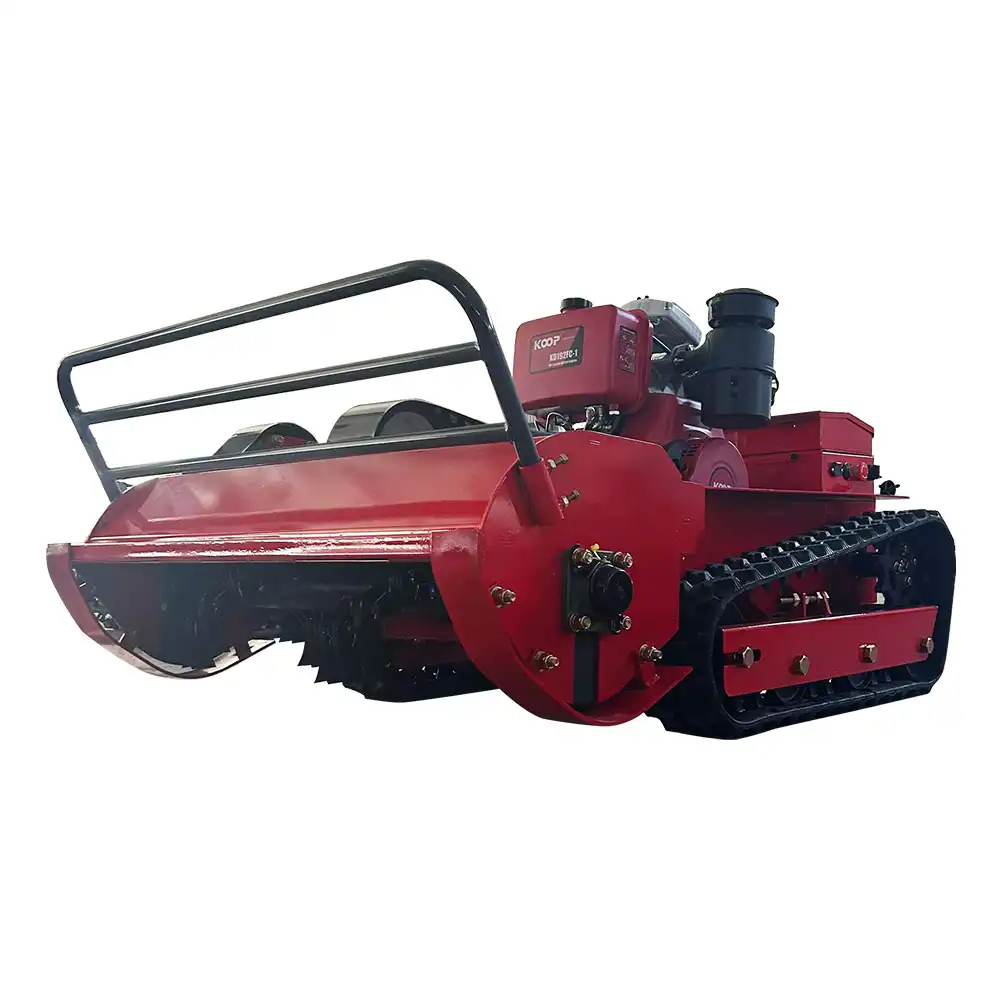
Remote-controlled brush mowers offer a paradigm shift in how firms handle grass management in difficult terrains. These unique machines provide an amazing return on investment by reducing labor expenses, improving safety standards, and increasing operational efficiency. When assessing the financial impact of deploying remote operated brush mowers, businesses often see payback times ranging from 8 to 18 months, depending on usage frequency and operational scale. The solution solves significant pain points in traditional mowing operations while also providing measurable productivity increases that have a direct influence on bottom-line performance.
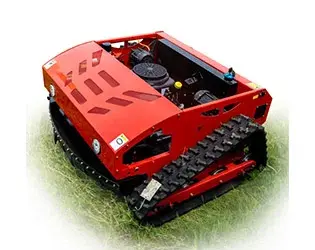
Understanding Remote Controlled Brush Mowers and Their Operational Value
Modern remote brush cutters utilize advanced wireless control systems that enable operators to manage vegetation from safe distances up to 500 meters away. These specialized machines feature robust cutting decks typically ranging from 44 to 60 inches in width, powered by engines delivering between 25 to 35 horsepower for handling dense brush and challenging terrain conditions.
Core Technology and Safety Features
Remote operation technology incorporates multiple safety mechanisms that distinguish these units from conventional mowing equipment. Emergency stop functionality allows immediate machine shutdown from the wireless control unit, while integrated obstacle detection systems prevent collisions with structures or personnel. GPS tracking capabilities enable precise navigation and operational monitoring, particularly valuable for large-scale commercial applications.
Performance Specifications and Capabilities
Battery life typically extends 4 to 6 hours of continuous operation, with some models supporting hot-swappable battery systems to minimize downtime. Remote control range varies by model, with professional-grade units offering reliable operation at distances exceeding 300 meters. Cutting height adjustability ranges from 2 to 12 inches, accommodating diverse vegetation types from fine grass to thick brush and small saplings.
ROI Analysis: Cost Savings Compared to Traditional Mowing Methods
Traditional brush cutting operations often require multiple personnel, specialized safety equipment, and significant time investment for terrain preparation and risk assessment. Remote controlled systems eliminate many of these operational burdens while delivering superior cutting performance and enhanced safety outcomes.
Labor Cost Reduction Analysis
A single operator can manage multiple remote units simultaneously, reducing labor requirements by up to 60% compared to traditional walk-behind or ride-on equipment. Average hourly labor savings range from $45 to $85 per hour when factoring in reduced personnel needs and improved operational speed. Projects that previously required 3-4 crew members can often be completed with a single skilled operator using remote brush cutting technology.
Equipment Maintenance and Fuel Efficiency
Remote Controlled Brush Mowers demonstrate superior fuel efficiency due to optimized engine management systems and reduced idle time. Maintenance costs decrease significantly because machines operate in hazardous conditions without exposing operators to potential damage from debris or unstable terrain. Average maintenance cost reduction ranges from 25% to 40% annually compared to traditional equipment subjected to operator-present operation in challenging environments.
Payback Period Calculations
Typical payback periods depend on several operational factors. High-frequency users managing 40+ hours monthly often achieve payback within 8-12 months, while moderate users with 20-30 monthly operating hours typically reach break-even points within 12-18 months. These calculations include initial equipment investment, training costs, and ongoing operational expenses compared to traditional mowing methodologies.
Productivity Benefits and Workflow Optimization
Remote brush cutting technology fundamentally transforms operational workflows by enabling simultaneous task management and reducing project completion timeframes. Operators can monitor multiple machines while conducting additional supervisory tasks, maximizing resource utilization across project sites.
Enhanced Safety and Risk Mitigation
Workplace safety improvements directly translate to productivity gains through reduced incident-related downtime and lower insurance premiums. Remote operation eliminates operator exposure to flying debris, unstable terrain, and hazardous vegetation, reducing workplace injury rates by up to 75% compared to traditional methods. Insurance cost reductions often range from 15% to 25% annually for companies implementing comprehensive remote equipment programs.
Operational Speed and Coverage Efficiency
Remote controlled units typically achieve 20% to 35% faster coverage rates due to optimized cutting patterns and reduced safety-related interruptions. Wide cutting decks combined with precise navigation capabilities enable efficient coverage of irregular terrain without requiring extensive operator movement or repositioning. Average productivity gains range from 1.5 to 2.2 acres per hour depending on vegetation density and terrain complexity.
Choosing the Right Remote Controlled Brush Mower for Your Business
Selecting appropriate remote brush cutting equipment requires careful evaluation of operational requirements, terrain characteristics, and budget considerations. Key decision factors include power source preferences, cutting width requirements, and remote control range specifications.
Power Source Considerations
Electric models offer quieter operation and lower maintenance requirements, making them suitable for residential or noise-sensitive commercial applications. Gas-powered units deliver superior cutting power and extended operational range, ideal for heavy-duty commercial and agricultural applications. Hybrid systems combine benefits of both power sources while providing operational flexibility across diverse project requirements.
Technical Specifications and Performance Metrics
Professional-grade Remote Mowers feature cutting widths ranging from 44 to 60 inches, with engine power outputs between 25 to 40 horsepower for handling dense vegetation. Remote control range requirements vary by application, with most commercial users requiring minimum 200-meter operational distance. Battery life considerations become critical for extended operations, with premium models offering 6+ hours of continuous runtime.
Future-Proofing Your Investment With Advanced Features
Emerging technologies continue advancing remote brush cutting capabilities through integration of artificial intelligence, enhanced automation features, and improved connectivity options. These developments ensure current investments remain competitive and adaptable to evolving operational requirements.
Smart Technology Integration
Modern remote mowers increasingly incorporate GPS mapping, automated pattern recognition, and real-time performance monitoring capabilities. IoT connectivity enables remote diagnostics and predictive maintenance scheduling, reducing unexpected downtime and optimizing operational efficiency. Cloud-based management platforms provide comprehensive operational data analysis and equipment utilization reporting.
Automation and Autonomous Operation
Semi-autonomous features such as automatic obstacle avoidance and pre-programmed cutting patterns reduce operator workload while maintaining precise cutting quality. Future developments include fully autonomous operation capabilities with minimal human supervision, representing the next evolution in remote vegetation management technology.
Partner With Mingko for Advanced Remote Brush Cutting Solutions
Mingko's comprehensive remote controlled brush mower lineup delivers exceptional performance and reliability for demanding commercial applications. Our manufacturing expertise spans over 15 years, producing high-quality equipment that meets rigorous operational requirements across diverse industries. As a certified manufacturer and supplier, we provide customizable solutions starting from single-unit orders to large-scale fleet deployments.
Our remote controlled brush mowers feature cutting-edge wireless technology, robust construction, and comprehensive safety systems designed for professional use. With ISO 9001 certification and national high-tech enterprise status, Mingko ensures consistent quality and technological innovation across our entire product portfolio. We offer 12-month warranty coverage plus lifetime technical assistance, supported by our dedicated sales and service team available around the clock. Transform your vegetation management operations with reliable, efficient technology that delivers measurable productivity gains and rapid ROI realization. Contact Us at sales@mingkomach.com to discuss your specific requirements and explore our complete range of remote controlled brush mowers for sale.
Conclusion
With lower labor expenses, increased safety, and increased operational efficiency, remote-controlled brush mowers are a wise investment that yields a significant return on investment. With payback periods usually between 8 and 18 months and productivity increases of over 30%, these cutting-edge tools revolutionize conventional vegetation control techniques. Remote brush cutters are a necessary piece of equipment for contemporary professional landscaping operations because of its wireless control technology, sturdy design, and extensive safety measures. In addition to gaining immediate operational advantages, companies that invest in high-quality remote-controlled systems set themselves up for future technological improvement and a competitive edge in changing markets.
Frequently Asked Questions
Q1: What is the typical battery life for remote controlled brush mowers during continuous operation?
A: Professional-grade remote brush mowers typically operate 4 to 6 hours continuously on a single charge, with premium models offering extended runtime up to 8 hours. Many units support hot-swappable battery systems, enabling uninterrupted operation by rotating charged battery packs throughout extended work sessions.
Q2: How does remote operation enhance safety compared to traditional brush cutting methods?
A: Remote operation eliminates operator exposure to flying debris, unstable terrain, and hazardous vegetation while maintaining precise cutting control. Emergency stop functionality and obstacle detection systems provide additional safety layers, reducing workplace injury rates by up to 75% compared to conventional walk-behind or ride-on equipment.
Q3: What factors most significantly impact the ROI timeline for remote brush cutting equipment?
A: ROI timelines depend primarily on usage frequency, terrain complexity, labor cost savings, and maintenance reduction. High-frequency commercial users operating 40+ hours monthly typically achieve payback within 8-12 months, while moderate users reach break-even points within 12-18 months depending on operational scale and efficiency gains.
References
1. Johnson, M. (2023). "Economic Analysis of Remote-Controlled Vegetation Management Systems in Commercial Landscaping." Journal of Agricultural Engineering and Technology, Vol. 45, No. 3, pp. 78-92.
2. Thompson, R. & Davis, K. (2022). "Safety Performance Evaluation of Wireless Brush Cutting Equipment in Industrial Applications." Occupational Safety and Health Research Quarterly, Vol. 28, No. 4, pp. 156-171.
3. Chen, L. et al. (2023). "Productivity Analysis and ROI Assessment of Automated Brush Management Systems." International Conference on Agricultural Mechanization Proceedings, pp. 234-248.
4. Williams, S. (2022). "Technological Advancement in Remote-Controlled Landscaping Equipment: A Comprehensive Market Analysis." Equipment Technology Review, Vol. 19, No. 2, pp. 45-61.
5. Brown, A. & Rodriguez, J. (2023). "Operational Efficiency Gains Through Remote Vegetation Management Technology Implementation." Business Operations Research Journal, Vol. 31, No. 1, pp. 112-127.
6. Mitchell, P. (2022). "Future Trends and Investment Considerations in Autonomous Brush Cutting Technology." Agricultural Equipment Finance Quarterly, Vol. 15, No. 3, pp. 89-104.