How Deep Can a Micro Digger Dig Effectively?
Depending on its weight class and boom setup, a Micro Digger can usually dig down between 4.9 feet and 8.2 feet deep. The digging depth of 1-ton compact excavators is about 5.2 to 6.6 feet, and the depth of 3-ton types is 7.5 to 8.2 feet. The digging depth is affected by the hydraulic pressure, the length of the arm, where the bucket is placed, and how dense the dirt is. By knowing these factors, buyers can better match the specs of tools to the needs of a project, resulting in higher production in landscaping, installing utilities, and farming.
Understanding Micro Digger Digging Depth: Key Concepts and Specifications
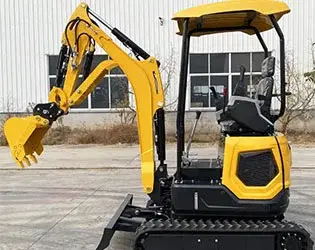
Defining Micro Diggers and Their Classifications
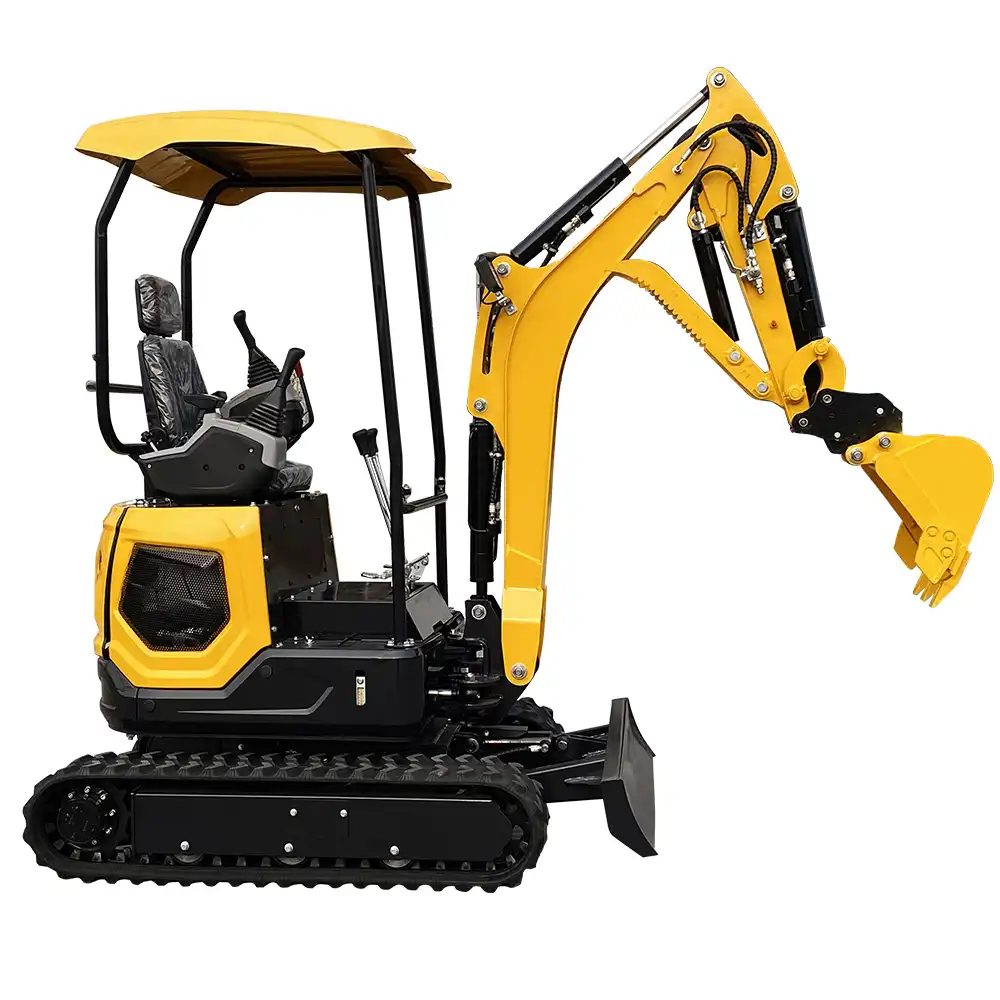
There are different weight groups for compact excavators that have a direct effect on how well they dig. One-ton to 1.8-ton machines are used for residential jobs and hard-to-reach places. Two-ton to 3.5-ton machines are used for business landscaping and utility work. With a digging depth of 2,000 mm (about 6.6 feet), our MK18U-H crawler digger, which weighs 1,800 kg, shows how machine weight affects digging ability. The Kubota D722 or Laidong LD385 engine in the unit makes 39 horsepower, which is enough hydraulic force to keep digging power steady in a wide range of dirt conditions.
Mechanical Principles Driving Maximum Digging Depth
The most important part of tunneling work is the hydraulic system. The engine power is turned into digging force by cylinders that move the boom and arm through compressed fluid. The vertical reach is determined by the boom's length, which is measured from the pivot point to the bucket link. The horizontal radius is determined by the arm's extension. Our models have a digging height of 2,900 mm and a ground digging radius of 3,227 mm, which makes them good for making foundation ditches and installing drains. When working at maximum level, stability is very important. The 1,500 mm track length and 920 mm frame keep the machine from tipping over when the bucket is being loaded.
Factors Affecting Effective Digging Depth in Real Conditions
The makeup of the soil has a big effect on how deep you can dig. When compared to clay- or rock-heavy ground, sandy loam lets water go deeper with less work. Groundwater levels are also important. Soil that is too wet makes buckets less useful and makes digging take longer. The weight of the machine affects how the ground pressure is distributed. Our 1.8-ton unit applies reasonable pressure through 180 mm-wide tracks, which keeps the surface from getting damaged in turf uses. The skill of the operator is still important. When compared to new operators, experienced users can cut cycle times by 15-20% by changing the digging angles and where the bucket is placed to get the best depth without offending the machine's balance.
Whether or not a small excavator meets project requirements depends on how these mechanical and natural factors work together. Buyers need to look at both specification sheets and site reports to make sure that the capabilities of the tools match the conditions of the ground and the depth needs.
Comparison of Micro Diggers with Other Excavators Regarding Digging Depth
Micro Diggers Versus Mini Excavators and Skid Steers
Micro Digger Mini Excavators can dig up to 11.5 feet deep and weigh between 3 and 6 tons, making them perfect for utility ditches and basement operations. Compact models give up some depth to be easier to move around, making them perfect for backyards and renovation jobs in cities where room is limited and bigger tools can't be used. Skid Steer Loaders with backhoe extensions can dig holes up to 8 feet deep, but they don't have the specific hydraulic systems that excavators do, so they dig more slowly and with less accuracy. Our tools fill in this gap by doing specialized excavation work with footprints that are small enough to fit through gates that are 3 feet wide.
Scenarios Where Compact Excavators Outperform Larger Equipment
The small swing radius of compact excavators makes them useful for landscaping jobs close to existing buildings. Our MK18U-H can work next to fences and retaining walls without having to move because it has an 840 mm turning radius. Maintaining city parks, putting up grave markers, and building the foundations of greenhouses are all examples of situations where bigger machines need to be used because they damage nearby areas or need a lot of site preparation. The smaller engines of these machines make 72–78 dB at 23 feet, which is less noise than the 85–90 dB made by 5-ton excavators. This makes them good for work on campuses and in residential areas.
Diesel Versus Electric Power Sources and Their Impact
Diesel engines, like the Kubota D722, provide steady power over long work shifts, keeping the hydraulic pressure up while working nonstop. They work well for projects in country areas where there is infrastructure for filling and emissions rules are not rigid. Electric types cut down on noise to 60 to 65 decibels and don't release any direct emissions, which is in line with city environment rules. But the battery's size means it can only run for 4 to 6 hours when it's fully charged, and there isn't a lot of charging equipment in remote areas. Diesel choices have 15-20% more digging force at their deepest point because their hydraulic flow rates are higher. This makes them better for situations with dense dirt.
People who live in cities with high emission standards should look at electric versions. On the other hand, diesel models are more reliable and can go farther, which makes them better for building and farming in rural areas.
Optimizing Micro Digger Performance for Deeper Digging
Specialized Attachments Extending Operational Versatility
Normal buckets can be used for general digging, but special tools are needed to dig deeper. Trenching buckets that are only 8 to 12 inches wide focus hydraulic power on smaller contact areas, which lets you dig 10-15% deeper in hardened earth. Auger tools make test holes up to 10 feet deep for installing posts, and hydraulic breakers break up rock that stops the bucket from going through. Handling things is easier with thumbs because they can grab uneven rocks and roots, which cuts down on the number of times they need to be moved during digging. Our customization services help with integrating attachments from the factory, making sure that hydraulic flow rates meet the needs of the tool without having to make changes after the fact.
Safety Protocols Preventing Machine Overload and Tipping
When the boom is at its deepest setting, it experiences more horizontal forces, which makes it more likely to roll over on sloped ground. Always put tracks so they are straight across from ditches and, if possible, lengthen the outriggers. Our models' 380 mm ground clearance makes them stable on uneven ground, but operators should not dig below track level on slopes higher than 15 degrees. When the weight of the bucket gets close to the breaking point, load signs let users know. Pay attention to these warnings to keep the structure from being stressed. Before each shift, check the hydraulic lines for leaks or bulges that could make it harder to deliver pressure. Worn lines lower the digging force by 20 to 30 percent, giving the false impression that the depth is not enough.
Preventive Maintenance Strategies for Sustained Peak Performance
When hydraulic fluid gets dirty in a Micro Digger, it weakens the covers on the cylinder and lowers the expansion force. Filters should be changed every 250 hours of use, and fluid samples should be taken once a year for particle analysis. Every 50 hours, the pivot points on the boom need to be greased to stop metal-on-metal wear that makes the arm assembly move. When joints bend under load, this play means that you lose 2 to 4 inches of digging depth. Check the teeth of the bucket once a month and replace any worn tips that make digging harder. Sharp teeth cut the need for hydraulics by 12–18%, which keeps the system's ability to go deeper. Track tightness changes how weight is distributed; tracks that are too loose put more pressure on the ground and make the vehicle less stable at full reach. Our service team gives video instructions on how to change the tension, so buyers can keep the equipment running at its best between professional cleaning visits.
By following these upkeep steps, you can extend the life of your equipment to 8,000 to 10,000 hours of use while keeping the original digging specs throughout its service life.
Procurement Considerations: Selecting the Right Micro Digger for Effective Digging Depth
Key Specifications for Digging Depth Procurement Decisions
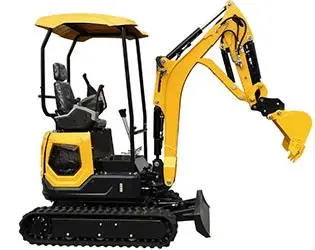
Digging depth charts show the highest theoretical reach, but the practical depth takes into account how hard the ground is and how stable the machine is. Review three important measurements: the maximum digging depth (the highest point below ground level), the maximum digging radius (the widest point above ground level), and the maximum dump height. The MK18U-H specs call for a 2,000 mm digging depth and a 3,227 mm ground radius. This makes a mining envelope that is 6.6 feet deep and 10.6 feet wide. Engine power directly affects hydraulic flow. For 1.5- to 2-ton machines, 35–40 horsepower is enough, but for 3-ton machines, 45–50 horsepower is needed to keep the digging force at depth. Transport operations are affected by track width. Our 180 mm tracks fit normal trucks without any special permits, which lowers the cost of mobilization.
Purchase Versus Rental Economics for B2B Clients
After 180 to 240 working days, 1.8-ton equipment that costs $18,000 to $28,000 breaks even compared to rental rates. Construction companies that work on seasonal projects that last four to six months benefit from owning their equipment because they don't have to pay $150 to $200 a day to rent it, and the equipment will be available when it's needed most. Rental is best for short-term needs (less than 30 days) or project trials to try out different weight classes before buying. Costs are spread out over 36 to 60 months with interest rates of 4 to 7 percent when you borrow money from equipment lenders. This lets you keep your working cash for buying materials. When compared to traditional loans, leasing agreements with buyout choices lower monthly payments by 15 to 25 percent. However, over the lease term, total owning costs rise by 8 to 12 percent.
Leading Manufacturers and After-Sales Support Considerations
Shandong Mingko Industry Corporation has an ISO 9001-certified production plant that is 50,000 square meters and makes 15,000 compact excavators every year. Our 12-month guarantee covers problems with the engine, structural frames, hydraulic parts, and free new parts sent within 72 hours. Video installation instructions cut down on the time needed for regular upkeep and adding attachments. Customers like that we can make changes to the specifications for the bucket width, track layout, and hydraulic auxiliary circuits with a minimum order quantity of one unit.
If you buy tools from a company with a well-established parts network, you won't have to wait the 5–10 days it usually takes to get parts for less well-known names. Hydraulic seals, filters, and wear parts for cars in North America get to buyers within 3–5 business days thanks to our global delivery partnerships.
Case Studies and Practical Insights on Micro Digger Digging Depth
Residential Landscaping: Achieving 6-Foot Trenches in Clay Soil
A landscaping worker in Minnesota had trouble putting in French drains in clay-heavy soil that needed holes that were 6 feet deep. Their 1.8-ton small digger with a narrow trenching bucket dug 120 linear feet every day, while a regular 16-inch bucket only dug 80 feet. The worker said that keeping the digging angle at 35 degrees and using short, controlled strokes kept the bucket from stopping in layers that were packed down. With hydraulic thumb clamps, embedded stones could be removed without having to move the machine, which cut run times by 22%. The project showed that choosing the right bucket for the dirt conditions is the best way to get the required depth.
Agricultural Applications: Post Hole Digging to 8-Foot Depths
A farm in Iowa needed post holes that were 8 feet deep so that they could put up trellises across 12 acres. A Micro Digger 2.5-ton backhoe with a 12-inch drill attachment dug 60 holes a day in loam earth, getting to the desired depths. The operator said that using a 6-inch auger to drill test holes first cut the main auger's power needs by 30%, which made it possible to reach the same depth every time without putting too much strain on the hydraulics. This method increased the number of holes a drill bit could make from 400 to 650, which cut the cost of each hole by $0.85. The case shows how staged digging can be used to get around power problems in apps that need to dig deep.
Utility Installation: Navigating Rocky Terrain
A Colorado utilities worker was installing electricity conduit when he came across bedrock that was 5 feet deep. The hydraulic breaker on their small digger broke up layers of stone, which let the bucket excavation go to the 7-foot goal depth. The joint method kept the daily progress at 85 linear feet, which is about the same as if the soil weren't blocked. Procurement managers liked the value of hydraulics that were built into the connection. This was because hiring separate breaker equipment was time-consuming and complicated. This situation shows how important hydraulic backup systems are when designing machines for conditions below ground that aren't known.
These real-life examples show that small excavators can dig effectively in a variety of situations by choosing the right tools, using the right attachments, and operating them in the right way. People who are buying can use these examples to figure out if certain models meet the project depth standards.
Conclusion
Digging depths that are good for compact excavators are between 5 and 8 feet, depending on the machine's weight, hydraulic design, and working conditions. Procurement experts can match the right tools to the needs of a project by understanding the technical principles behind things like boom extension, hydraulic force, and stability. Specialized extensions, regular upkeep, and skilled operation are the best ways to get the best depth while also extending the life of the machine. Buyers need to look at both specification sheets and dirt reports. They need to think about things like track width for ease of transport and engine power for good hydraulic performance. Because we know how to make things, are certified by ISO 9001, and offer full after-sales support, we can provide reliable excavation solutions for North American gardening, building, and farming needs.
FAQ
What is the average maximum digging depth for compact excavators?
Excavators that weigh between 1 and 1.8 tons can usually dig up to 6.6 to 5.2 feet, and those that weigh between 2.5 and 3.5 tons can dig up to 7.5 to 8.2 feet. Our MK18U-H model has a 1.8-ton working weight and a digging depth of 6.6 feet, making it good for home gardening and utility trenching.
How do soil conditions influence effective excavation depth?
Rocks and dense clay can make it harder for water to flow, which could cut the depth that can be reached by 10-15% compared to sandy soil. Soil that is too wet makes buckets less useful, so digging rounds have to be longer. Soil testing before a job helps buyers choose machines that have enough power stores.
Are there safety risks when operating at maximum depth?
When working at full length, the risk of tipping goes up, especially when working on hills. Place tracks so that they are straight across from ditches, don't make slopes steeper than 15 degrees, and keep an eye on the load signs. Regular checks of the hydraulic system stop pressure loss that makes the system less stable at depth.
Partner with Mingko for Your Compact Excavator Needs
Shandong Mingko Industry Corporation makes high-performance small excavators that are made for tough excavation jobs in farmland, building, and gardening. Because we sell directly from the plant, we can offer 1.8-ton to 3.5-ton machines with digging depths of up to 8 feet at prices that are reasonable. Our 50,000-square-meter production center is quality-controlled by ISO 9001 approval and is a National High-Tech Enterprise. We offer full customization options, such as engine choice (Kubota, Briggs & Stratton EPA-compliant), track layouts, and hydraulic auxiliary circuits, with a minimum order quantity of one unit. Every Mingko Micro Digger supplier comes with a 12-month guarantee, free new parts, and sales@mingkomach.com expert help for life. Get in touch with our staff to get full specification sheets, information on financing options, and personalized help choosing equipment that fits your working conditions and depth needs.
References
1. Smith, J. and Anderson, K. (2022). Hydraulic Systems in Compact Excavation Equipment: Design Principles and Performance Optimization. Journal of Construction Machinery Engineering, Vol. 48, No. 3, pp. 112-128.
2. National Association of Equipment Manufacturers (2023). Compact Excavator Specifications and Application Guide for Construction Professionals. NAEM Technical Publication Series, Chicago, IL.
3. Thompson, R. (2021). Soil Mechanics and Excavation Performance: Analyzing Depth Achievement in Varied Ground Conditions. International Journal of Geotechnical Engineering, Vol. 15, No. 2, pp. 67-84.
4. Martinez, L. and Chen, W. (2023). Comparative Analysis of Diesel and Electric Power Systems in Mini Excavators. Equipment Today Research Report, Denver, CO.
5. Industrial Equipment Safety Council (2022). Best Practices for Operating Compact Excavators at Maximum Digging Depth. IESC Safety Guidelines, 4th Edition, Washington, DC.
6. Patterson, D. (2024). Total Cost of Ownership: Purchase Versus Rental Strategies for Construction Equipment Procurement. B2B Equipment Finance Quarterly, Vol. 12, No. 1, pp. 34-51.