How Do Wheeled vs Tracked 450 Mini Skid Steer Loaders Compare?
When shopping for a Small Skid Steer loader for your business, it's important to know whether a wheeled or tracked design will work best for you. The main difference is how they move and handle different types of terrain. Wheeled models are faster and easier to drive on hard, flat areas, while tracked models are more stable and have better traction on soft, uneven, or muddy ground. The 450 Mini Skid Steer Loader can lift to 450 kg in both configurations, which makes it useful for a wide range of jobs in gardening, building, and material handling. Your choice should fit the conditions of the spot, the needs for transport, and the long-term upkeep needs that define your process.
Understanding the Basics of Wheeled and Tracked 450 Mini Skid Steer Loaders
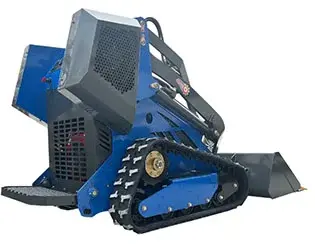
Because they are flexible and work well in small areas, all kinds of businesses now need compact Skid Steer Loaders. Most of these machines weigh between 900 kg and 1,200 kg. The MK450 type from Shandong Mingko Industry Corporation weighs 960 kg, which makes it very stable without making it too heavy to move around. With gasoline engines like the B&S EPA/Euro 5-certified 23 HP or the Hongda GX690 23 HP, these loaders provide steady power for tough jobs while also meeting strict environmental standards.
Key Specifications and Industrial Applications
Knowing the main requirements helps the buying team decide if something is suitable. The MK450 450 Mini Skid Steer Loader can lift up to 450 kg and has a 0.15-cubic-meter bucket, which makes it perfect for moving things, digging, and getting the site ready. This machine can work with a variety of hydraulic tools, like augers, trenchers, and grapples, thanks to its extra flow rate of 45 L/min. The small width of 1030 mm makes it possible to get to tight job places where bigger tools can't work as well. This mix of power and compactness is good for a lot of different fields, from gardening and farming to light building.
Structural Differences Between Wheeled and Tracked Models
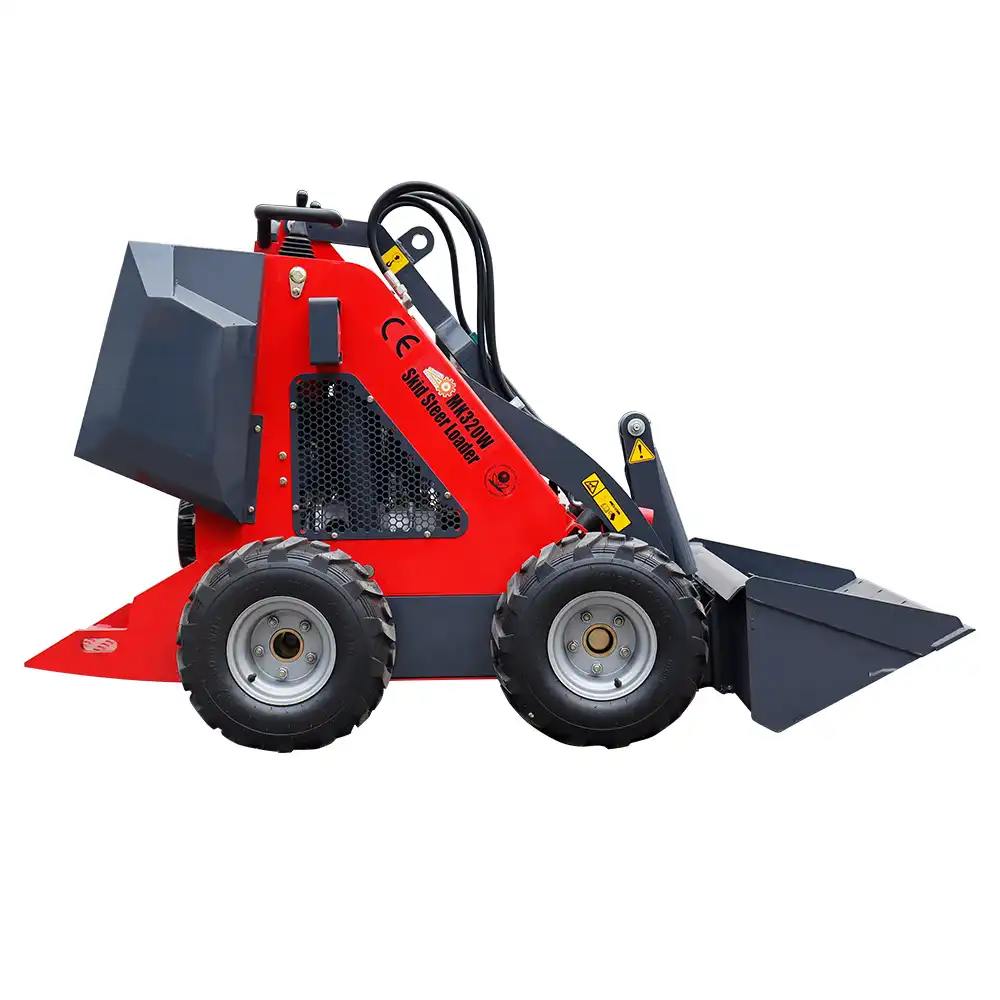
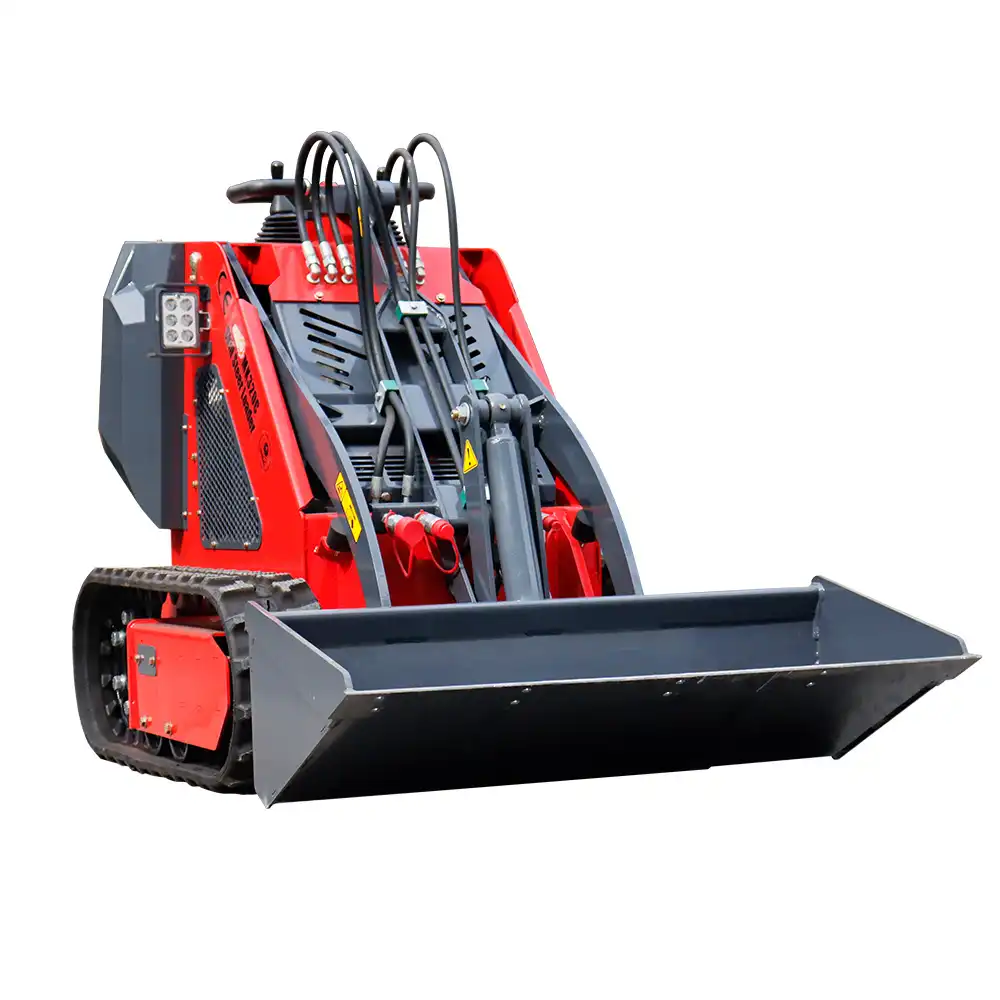
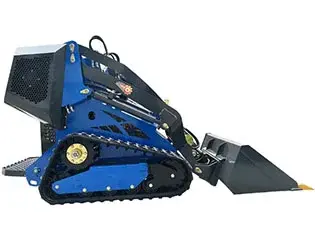
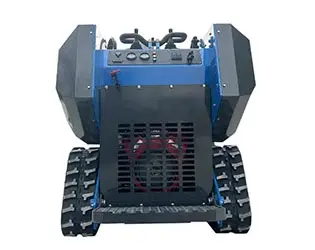
The main difference is in the shape of the chassis. Wheeled loaders have pneumatic or solid rubber tires on wheels that let them move quickly on concrete floors, paved roads, and packed dirt. This setup lowers the ground pressure on finished surfaces, which keeps grass, driveways, and factory floors from getting damaged. On the other hand, tracked types have continuous rubber or steel tracks that spread the weight over a larger surface area. This lowers ground pressure even more and makes it easier to float on sand, snow, and soft soils. Tracks also reduce the risk of tire punctures, which is very helpful in places with a lot of garbage.
Core Mechanics and Operational Characteristics
The skid-steering system works in both ways. The difference in speed between the left and right wheels or tracks lets the vehicle turn quickly. Wheeled versions can go faster, often over 10 km/h, which is beneficial for projects that need to move between job places a lot. Tracked loaders give up some speed in exchange for more moving power and the ability to go up higher hills without losing their grip. The amounts of noise are also different. Models with wheels tend to be quieter when they're working on firm surfaces, while models with tracks make rumbling sounds when the rollers and idlers connect with the track.
Performance and Operational Comparison
To rate performance measures, you have to look at how each setup works in the real world. To maximize fleet performance and meet project deadlines, procurement professionals must consider the trade-offs between speed, stability, fuel use, and repair needs.
Terrain Adaptability and Traction Performance
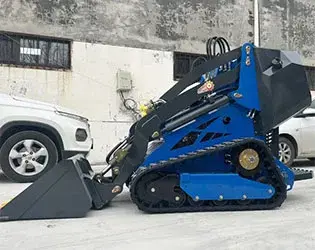
Wheeled loaders work best on stable, smooth surfaces like factory floors, asphalt parking lots, and dirt roads that people have packed down. The way their tires are made gives them excellent grip on dry ground and lets them move quickly from one job to another without damaging the surface. On the other hand, performance drops quickly on dirty, sandy, or icy surfaces, where tires lose their grip and spin ineffectively. Tracked loaders are the best in these tough conditions because they keep up a steady moving force and keep the soil from getting rutted. Because tracks have a bigger surface, they spread the weight of the machine out more evenly. This allows them to work on wetland areas, loose dirt, and newly graded areas where wheeled models would get stuck.
Fuel Efficiency and Energy Consumption
How much fuel is used has a big effect on operating costs. Wheeled skid steers usually use less fuel for light-duty jobs and transport because they have less moving resistance than tracks. Track systems use more energy because they have mechanical drag, which is especially noticeable when moving. According to studies from equipment makers, wheeled loaders may use 10 to 15 percent more fuel when doing the same amount of work. However, this difference in effectiveness gets smaller when working on rough ground, where wheeled models have trouble and need more throttle to stay productive. The MK450's gasoline engine choices get good gas mileage by meeting EPA and Euro 5 standards. This means that lower operating costs are guaranteed no matter what setup is chosen.
Maintenance Requirements and Service Intervals
Different types of undercarriages have very different maintenance schedules. Wheeled tractors need to have their tires inspected, their pressure checked, and eventually replaced if the tread wears down or a hole forms. The cost of tires depends on how rough the ground is; rough areas wear down tires faster. Tracked systems need to have their tightness adjusted on a regular basis to keep the tracks from slipping and the drive sprockets and rollers from wearing out too quickly. It costs a lot to repair tracks, but with the right care, new rubber tracks can last 1,500 to 2,000 hours of use. Tracked undercarriages have more lubrication spots, so they need to be serviced more often to keep the guarantee valid and keep parts from breaking down early.
Application Suitability: Choosing the Right Model for Your Business Needs
Getting the most out of your investment means matching the tools to the needs of the business. Different business situations require different arrangements because of the nature of the job, the variety of tasks, and the limitations of logistics.
Landscaping and Construction Use Cases
Landscapers use wheeled vehicles to work on established gardens and hardscaped areas that need to keep their surfaces in good shape. Wheeled models are better for home jobs and golf course care because they put less pressure on the ground than tracked models, which protects the grass. Different types of construction projects have different needs. For example, when clearing out an unused land for building, tracked loaders work best because they can handle rough ground and move big materials easily. Wheeled models that can move quickly between places without needing to be pulled by a trailer are more efficient for urban building projects that are limited to paved streets and loading docks.
Attachment Versatility and Compatibility
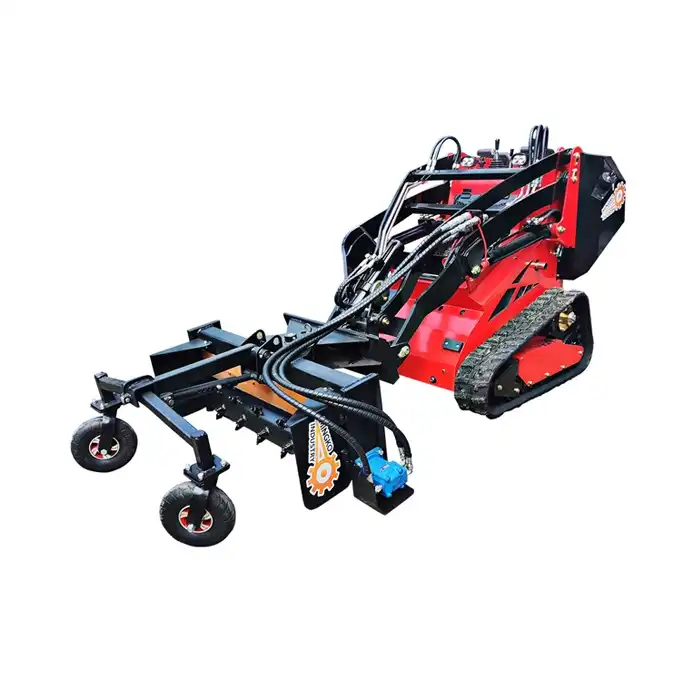
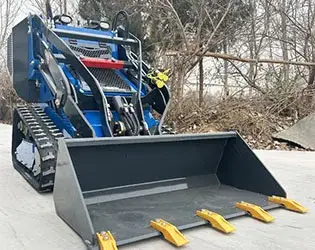
Standard quick-attach systems that work with both Bobcat and Caterpillar tools can be used with either setup. This means that the machines can do more than just bucket work. The MK450 has an extra hydraulic flow of 45L/min that lets powered devices like brush cutters, snow blowers, and hydraulic hammers work. When using heavy tools like concrete breakers, wheeled loaders may not be safe. Tracked models, on the other hand, offer a more stable base for strong tooling. When choosing an attachment, you should think about the loader's 450-kilogram lifting ability and the total center of gravity of the attachment and the loaded material.
Weight and Transport Considerations
Planning logistics must take into account how tools can move from one job place to another. The MK450 450 mini skid steer loader weighs 960 kg, which is still light enough for normal equipment trucks in most places without the need for special permits. Ramps make it easier to load and unload wheeled models, but tracked loaders need bigger ramps or heavy-duty loading tools. Wheeled units take up a little less room because they have a narrower base, but tracked models often stack more compactly when more than one is kept together. Transport regularity affects the choice of configuration. For example, workers who move equipment every day tend to prefer wheeled loaders, while those who set up a semi-permanent site presence tend to prefer tracked flexibility.
Market Overview and Brand Comparison of 450 Mini Skid Steer Loaders
Knowing what the competitors are doing helps procurement teams find value offers and deal more effectively. Market share is mostly held by well-known brands, but new companies like Shandong Mingko Industry Corporation offer appealing options by letting customers pay directly at the factory and making their products fit their needs. Major names like Volvo, Bobcat, Caterpillar, John Deere, and Kubota have large dealer networks all over the United States. This makes parts and service help easy to find. The prices of compact skid steers from these companies range from $25,000 to $45,000, based on the features and design.
Mingko stands out because it sells directly from the factory, so there are no markups for distributors. This means that the prices are low without sacrificing quality. Our EPA and CE licenses show that we follow American and European rules, and our experience in over 15 years of international trade shows that we are dedicated to these markets. The MK450 model uses tried-and-true engine technology from companies like Briggs & Stratton and Honda. Our Jinxiang plant can make more than 15,000 units a year, which ensures that we will have inventory and be able to fill orders quickly and easily.
Another important thing to compare is warranty support. Most premium brands come with warranties that last between 12 and 24 months and cover a variety of parts. Mingko offers a full 12-month warranty and free technical support for life, backed by our specialized after-sales service staff. We keep popular replacement parts in stock and make foreign shipping easier by streamlining customs clearance. This means that when repairs are needed, there is less downtime. This support system, along with customer service available 24/7 at sales@mingkomach.com, gives customers the same peace of mind as well-known names at a much lower cost.
Making the Decision: How to Choose Between Wheeled and Tracked 450 Mini Skid-Steer Loaders?
When choosing strategic tools, you need to carefully consider the surroundings, the needs of operations, and the costs involved. An organized strategy that takes into account both short-term needs and long-term value protection should be used by procurement managers.
Environmental and Operational Requirements
Start by writing down what the worksite is usually like: the type of dirt, how the terrain changes, the yearly weather trends, and how sensitive the surface is. For projects that are mostly on paved or packed surfaces, wheeled configurations work best. On the other hand, tracked configurations are better for projects that have soft soils, steep grades, or uncertain terrain. Think about how often you use attachments—operations that rely on strong tools benefit from tracked steadiness. Also, think about how skilled the operators are. Wheeled loaders are easier for less experienced workers to use, while tracked models need more knowledge of how skid turning works on rough ground.
Total Cost of Ownership Analysis
In addition to the initial buy price, you should also figure out the vehicle's lifetime costs, such as its fuel use, repair parts, service work, and ultimate resale value. Tracked undercarriages cost more to maintain, but they may save money on site preparation costs if they work well in situations that don't need any extra grinding. Wheeled models save money on transportation and handling costs and let operators work at more than one spot every day, which could lead to more sales. Different types of loaders lose value at different rates. Wheeled loaders tend to hold their value better in urban areas, while professional workers in rural or industrial areas like tracked versions.
Real-World Implementation Insights
A gardening company in the Midwest that mostly worked on private properties bought a tracked loader at first because it was flexible, but neighbors complained about damage to the surface. By switching to a wheeled type, they were able to keep working efficiently on their regular job areas without damaging the grass. On the other hand, a site development company in the southeast often had problems with their wheeled fleet getting stuck in clay soils, which caused costly delays. Switching to tracked trucks sped up the project and cut down on the need for extra tools to prepare the site for entry. These examples show how important it is to make sure that the capabilities of tools exactly meet the needs of operations, instead of thinking that one configuration works for all situations.
Conclusion
When choosing between wheeled and tracked designs for a compact 450 mini skid steer loader, you need to carefully look at the conditions of the job site, your working priorities, and your budget. Wheeled models are faster, easier to use on smooth surfaces, and use less fuel when the ground is cleared, while tracked models offer the best traction and control on rough terrain. Shandong Mingko Industry Corporation's MK450 comes in two different configurations. It has proven engine technology, meets EPA standards, and has a low factory-direct price. Procurement pros can easily pick the configuration that boosts productivity and safeguards their investment by looking at the total cost of ownership, the need for attachments, and the specific needs of the job.
FAQ
Which loader type performs better on uneven terrain?
Tracked loaders work much better than wheeled types on rough, soft, or slippery ground because they have a bigger contact area and better weight distribution. The continuous track design keeps the wheels from falling into mud or sand and keeps them from slipping on high hills.
What maintenance schedule should I follow for tracked models?
Tracked skid steers need to have their track tension and state checked every day, their idlers and rollers oiled once a week, and their drive sprockets and track wear signs checked thoroughly every month. Depending on how rough the ground is, track tension changes are usually made every 50 to 100 hours of operation.
How does fuel efficiency compare between configurations?
Wheeled loaders use 10 to 15 percent less fuel than tracked types when doing the same amount of work on flat ground. But this benefit is lessened or even reversed when working on rough ground, where wheeled units have trouble and need more throttle to keep working.
Partner with a Trusted 450 Mini Skid Steer Loader Manufacturer
With factory-direct access to the MK450 skid steer loader, Shandong Mingko Industry Corporation is ready to help you buy the tools you need. We are a well-known maker with ISO 9001 approval and National High-Tech Enterprise standing. We manufacture reliable machines and provide comprehensive support for them. Our customization services can handle orders as small as one unit, making sure that the specs of your loader exactly match the needs of your business. We've been exporting for more than 15 years, so we know what the American market wants and can give you EPA-certified engines that meet all the rules. Send an email to sales@mingkomach.com to get reasonable prices on 450 mini skid steer loader types that are on wheels or tracks. Our 12-month guarantee and forever technical support will keep your investment safe, and our streamlined foreign shipping will get it to you on time.
References
1. American Society of Agricultural and Biological Engineers, "Performance Standards for Compact Utility Loaders," ASABE Standards, 2021.
2. Construction Equipment Magazine, "Comparative Analysis of Wheeled versus Tracked Compact Loaders in Variable Terrain Applications," Industry Report, 2022.
3. National Institute for Occupational Safety and Health, "Safety Considerations for Skid Steer Loader Operation," NIOSH Publication Series, 2020.
4. Peterson, R.L., "Total Cost of Ownership Models for Construction Equipment Fleet Management," Journal of Construction Engineering and Management, 2023.
5. Society of Automotive Engineers, "Hydraulic System Requirements for Compact Construction Equipment," SAE Technical Paper Series, 2021.
6. United States Environmental Protection Agency, "Emission Standards for Small Off-Road Engines," EPA Regulatory Guidelines, 2022.