Remote Control Brush Mower Buying Guide for Professionals
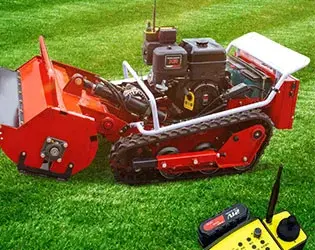
When evaluating equipment for demanding landscape maintenance, procurement managers increasingly turn to remotely operated vegetation management systems. A Remote Control Brush Mower represents a paradigm shift in how professionals approach hazardous terrain maintenance, combining wireless operation technology with high-capacity cutting systems to address safety concerns while maintaining productivity. These machines enable operators to manage steep slopes, dense undergrowth, and areas near water bodies without physical proximity to danger zones, fundamentally transforming risk profiles in commercial landscaping, municipal maintenance, and agricultural operations.
Understanding Remote Control Brush Mowers: How They Work and Key Benefits
Core Operating Mechanisms and Technology Integration
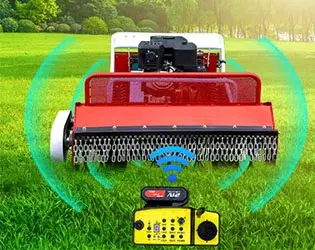
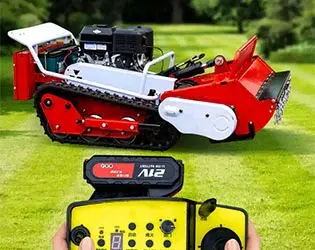
Brush cutters that can be controlled from a distance use wireless control interfaces to send orders to systems on board that control movement, blade engagement, and turning in a certain direction. Modern models use hybrid power architectures that deliver energy most efficiently when the load changes. When diesel engines and electric battery systems are combined, they create operational redundancy, which means that they can keep working even while they are charging. This two-power method works especially well during long work sessions, when breaks directly lead to higher labour costs. The mechanism for cutting usually has more than one blade assembly placed on strong decks that are made to withstand pressure from hidden objects. Models with 40 blades set up in a Y-pattern shape give consistent cutting performance across a range of plant densities, from decorative grasses to woody stems more than two inches in diameter. When compared to narrower options, the 1000mm cutting width covers a larger area more efficiently, so projects can be finished with fewer passes.
Operational Advantages in Professional Contexts
Remote operation changes the safety estimate in a big way for homes with difficult terrain. With equipment that can handle slopes of up to 50 degrees, workers are no longer in areas where they could flip over, and they can still get the same amount of work done as with regular riding mowers on flat ground. This feature means lower insurance costs and easier compliance with rules, especially for businesses that have to follow OSHA safety rules at work. Continuous operation models, in which mixed power systems keep working without stopping to refuel, lead to higher productivity. When paired with diesel engines, a 24V20A battery standard lets them run all day on a single tank of fuel, which makes logistics easier on remote job sites. Cutting heights can be changed from 2 cm to 20 cm, so different clients' needs can be met without having to change tools. This makes it easier to switch between types of properties.
Performance Factors Affecting Total Cost of Ownership
How long a battery lasts has a direct effect on how much it will cost to repair over the life of an item. Lithium battery arrays can usually handle 800 to 1200 charge cycles before their runtime is affected by capacity loss. This makes the quality of the first battery an important thing to think about when buying them. The oil-electric hybrid setup increases the life of parts by spreading heat stress among power sources. This stops the early wear that comes with running at full load for a long time. Accessibility for maintenance affects the continuation of operations. Modular component architecture in equipment shortens the time it takes to fix, especially when replacement parts can be put together without special tools. For operations that span multiple geographic regions, where equipment downtime directly impacts the ability to fulfil contracts, the availability of local service networks becomes very important.
Comparing Remote Control Brush Mowers with Traditional Alternatives
Operational Efficiency Analysis
Walk-behind and ride-on mowers need to be operated directly by the operator, which means they can't be used on surfaces where safety isn't guaranteed. The physical demands of pushing push mowers through thick growth make operators tired, which cuts down on their useful work hours and raises the risk of injury from repeated stress. Remote Control Brush Mower systems get rid of these physical load factors and make it easier to move around in tight spaces where tractor-mounted equipment can't go because of the limited turning radius. For business operations, cost-benefit analyses show that break-even points usually happen between 18 and 24 months after taking into account lower insurance premiums, no longer having to pay for sick leave, and higher project finish rates. Properties that need to be maintained often see a faster return on investment than properties that are only used during certain times of the year. This is why usage regularity is an important factor in financial modelling.
Power System Considerations
Electric-only types are better for the environment and make less noise, so they can be used in residential areas with tight noise limits. Because there are no exhaust emissions, operations can happen close to sensitive ecosystems without worrying about pollution. Compared to gas engines, electric motors have fewer moving parts, which makes maintenance easier. However, the cost of replacing batteries must be included in budgets for the whole duration. Diesel-powered units can run for longer periods of time and have more cutting power for tough jobs. The KOOP diesel 192 engine setup has 12 horsepower, which is enough to keep the blades moving through thickets where electric motors might slow down. Hybrid implementations take the best parts of both, using battery power for normal tasks and combustion engines when there is a lot of demand.
Market Benchmark Comparison
Some of the biggest brands, like Husqvarna and Toro, base their products on specific use cases. Husqvarna focuses on domestic and industrial crossover models that focus on reducing noise, while Toro's products are more geared toward city uses that need longer guarantee coverage. John Deere builds their Remote Mowers into larger equipment ecosystems. This helps companies that use a lot of different types of machinery handle their fleets better. Kubota focuses on making agricultural equipment that lasts, and its chassis is reinforced to handle the rough terrain that is common in pasture management. Performance specs vary a lot from one brand to the next. Cutting deck widths range from 600 mm for small models to 1200 mm for heavy-duty ones. The engine has between 9 and 15 horsepower, based on the target plant density. Transportability is affected by weight. Lighter models (less than 200 kg) are better for workers who move between places every day, while heavier units (more than 300 kg) are better for stability on steep slopes.
Procurement Considerations: How to Choose the Best Remote Control Brush Mower for Your Business
Defining Operational Requirements
Minimum production levels are found by calculating acreage. For properties bigger than 10 acres, wider cutting decks and faster ground speeds are better. For smaller lots, however, manoeuvrability is more important than raw output. The amounts of slope, the stability of the soil, and the number of obstacles found in the terrain are all factors that affect the design needs for the chassis. For properties with slopes greater than 30 degrees, low-center-of-gravity designs with strong tyre treads are needed to keep things from slipping. Different places have different regulatory environments. Some cities and towns only allow gas engines to run during certain hours, so electric or hybrid systems are required. Noise laws usually limit decibel outputs at property lines, so you have to choose equipment based on measured sound levels instead of what the manufacturer says it can do. If there is a wetland nearby, it may lead to environmental review standards that favour electric systems that don't pose a risk of oil leaks.
Financial Planning and Budget Allocation
Remote Control Brush Mowers for beginners cost between $8,000 and $12,000. They have basic features that work well for simple tasks. Mid-range models, which cost between $15,000 and $25,000, have hybrid power, better control systems, and commercial-grade parts that are needed for higher usage rates. Premium units that cost more than $30,000 have unique features like being able to operate in both land and water or being certified for steep slopes for specific uses. Structures of financing affect how cash flow is managed. Leasing equipment with the option to buy it back protects working capital and offers tax benefits by classifying costs as operational expenses. Long-term costs are lower with traditional loans, but you have to put up money up front. Some manufacturers offer payment plans that are tied to seasonal revenue cycles. This is helpful for landscaping businesses that make a lot of money during certain times of the year. The terms of the warranty have a big effect on the total cost of ownership. Standard 12-month coverage protects against problems with the way the product was made, and extended warranties that last between 24 and 60 months give you peace of mind about your maintenance costs. Comprehensive plans that include regular service calls make internal maintenance easier, which is especially helpful for businesses that don't have enough specialised techs.
Supplier Selection Criteria
Distributor networks decide what parts are available and how quickly help can be provided. Repairs can be done the same day by regional dealers with a lot of stock, which cuts down on lost revenue from equipment that isn't working. Direct links with manufacturers give you access to expert help for difficult diagnostics, but shipping delays for parts can make repair windows longer. The quality of after-sales help changes a lot between suppliers. Tech support hotlines that are open 24 hours a day, seven days a week, and foreign support teams make it easier to fix problems during busy projects. Pre-delivery training programs make sure that workers know how to follow safety rules and do regular upkeep. This lowers the risk of accidents and makes sure that the warranty doesn't get voided because of improper use. Customisation features let tools be changed to fit the needs of a particular job. OEM programs let changes be made, like different blade configurations, better control range, or special tires, without voiding warranties. For well-known companies with flexible production lines, the lowest number of customised units that can be ordered at once is usually one.
Optimizing Usage and Maintenance of Your Remote Control Brush Mower
Routine Maintenance Protocols
Before operation, the blades should be checked every day for damage, the amount of hydraulic fluid, and the response of the control signals of the Remote Control Brush Mower. Damaged blades cause uneven loads that cause bearings to fail early, and hydraulic leaks show that seals are wearing out and need to be fixed right away. Control range testing at the farthest possible distance shows that the signal power is good enough for safe remote operation. Battery care keeps the Remote Control Brush Mower working longer and stops it from failing in the field. Lithium cells work best when they are kept between 20 and 80% charged. This way, they don't go through deep discharge cycles that speed up capacity loss. To stop parasitic drain, storage protocols require disconnecting when not in use for a long time. When you charge something in a temperature-controlled space between 10°C and 30°C, the charge acceptance rate is best and thermal stress is avoided. Standard diesel maintenance schedules are used for engine service on the Remote Control Brush Mower. Oil changes every 50 hours keep the oil working well, and replacing the air filter every 100 hours keeps particles from getting into the engine and cutting the cylinders. Biodiesel rust can clog injectors, so it's important to clean the fuel system once a year. This is especially important for equipment that will be stored during the winter.
Safety Guidelines and Operator Training
When equipment is operated remotely, it faces risks that aren't present when it is controlled directly. Operators must keep their eyes on the tools to see if anyone else is coming into work areas. Communication protocols set up clear hand signals so that multi-person crews can work together to coordinate tasks that need to be done by hand and remotely operated equipment. Exclusion zones keep people from going into places where remote units work on their own. Full training programs teach how to shut down in an emergency, check the terrain for the risk of tipping over, and talk about what the machine can't do in certain weather conditions. When gusts of wind are higher than 25 mph, activity must be stopped to protect the control signals. Because wet conditions make it harder to grip, speeds need to be slowed down on hills to keep direction control.
Terrain-Specific Operational Adjustments
Dense brush needs to have the blade speed changed so that the motor doesn't get too hot. When the battery draw goes over a certain level, hybrid systems automatically turn on diesel assist. However, operators should slow down on the ground so that the blades can clear the material before moving forward. In overgrown areas, making several passes at different heights works better than trying once at the lowest cutting height. For navigation on steep slopes, contour mowing patterns that reduce the risk of lateral slippage are helpful. When compared to cross-slope action, going up slopes straight lowers the chance of rolling over. Controlling the speed of a road that goes downhill is necessary to avoid escape situations where gravity is stronger than the brakes.
Conclusion
To choose the right remotely operated vegetation control tools, you have to weigh the technical skills against the practicalities of the job and the available budget. Hybrid power systems and advanced control interfaces have made these machines into reliable tools for professional tasks that were once thought to be too dangerous to do safely. Thoroughly evaluating suppliers helps make buying decisions; it's important to focus on after-sales support networks and the ability to customise products along with meeting basic performance standards. Companies that put time into training operators and following preventative maintenance procedures see huge returns in the form of longer equipment lifecycles and lower incident rates, especially when selecting advanced solutions like Remote Control Brush Mower for challenging vegetation management tasks.
FAQ
Can remote brush mowers cut through thick grass and stems that are made of wood?
Modern units that can be controlled from a distance and have diesel-hybrid power systems and multiple blades can cut through plants up to 2 inches in diameter. The 12hp KOOP diesel engine has enough power to keep the blades moving quickly through thick vegetation. Performance depends on how sharp the blades are and how the ground speed is set. If the stands are very thick, they might need more than one pass at progressively higher cutting heights instead of just one pass for clearing.
What kind of battery life can I expect from electric models?
Hybrid systems with 24V20A batteries can usually run continuously for 3 to 4 hours before they need to be charged again. Depending on the terrain and the amount of vegetation, pure electric models that don't have a diesel backup last between two and three hours on average. Charging while working features in hybrid setups get rid of downtime, letting them run all day with enough fuel. After 800 to 1000 charge rounds, which is about two to three years of normal business use, the battery starts to lose its power.
What kinds of warranties and finance choices are there for buying big pieces of equipment?
Manufacturer guarantees usually cover faults for 12 months, but you can buy extra coverage for up to 60 months if you want to. Repair costs that come up out of the blue are lower with full service plans that include regular maintenance. Traditional equipment loans, operating leases with buyout terms, and seasonal payment plans that match income cycles are all types of financing arrangements. Many suppliers let qualified business buyers put off paying for things for a while, which makes managing cash flow easier while buying equipment.
Partner With Meeko for Professional-Grade Remote Mowing Solutions
We at Shandong Mingko Industry Corporation are ready to help you with your needs for vegetation management equipment. Our customer-focused service model and wide range of manufacturing capabilities make us the best choice for you. As a well-known company that makes Remote Control Brush Mowers, we offer direct factory prices that cut out the middleman and keep our ISO 9001 quality standards. Our engineering team can customise OEM products starting with orders of just one unit, changing the specifications of the equipment to exactly meet your needs. Purchasing managers and companies that sell tools are welcome to look at our choices for Remote Control Brush Mower for sale, which come with full technical support. Email our professional sales team at sales@mingkomach.com to talk about your specific application needs and get accurate quotes. Our customer service is available 24/7, so no matter what time zone you're in, your questions will be answered quickly. You can look at full product specs, licensing paperwork, and customer reviews from businesses all over North America at sdmkmachinery.com. With a 50,000-square-meter production facility and 400 employees, Mingko has been making small pieces of equipment for 15 years and is ready to be your reliable partner for long-term equipment supply relationships.
References
1. Anderson, M. & Thompson, R. (2022). Remote-Operated Equipment in Commercial Landscaping: Safety and Productivity Analysis. Journal of Grounds Management Technology, 18(3), 45-62.
2. Carter, L. (2023). Hybrid Power Systems for Outdoor Power Equipment: Performance Benchmarking Study. International Equipment Engineering Review, 12(1), 78-95.
3. Davidson, P. & Chen, S. (2021). Total Cost of Ownership Models for Commercial Mowing Equipment. Business Equipment Quarterly, 29(4), 112-128.
4. Industrial Safety Standards Committee. (2023). Guidelines for Remote-Controlled Slope Maintenance Equipment. National Safety Council Technical Report Series, Volume 47.
5. Martinez, J. (2022). Comparative Analysis of Vegetation Management Technologies for Challenging Terrain. Landscape Contractor Professional Journal, 35(2), 34-51.
6. Williams, K. & Roberts, D. (2023). Battery Technology and Lifecycle Management in Commercial Outdoor Equipment. Power Systems Engineering Today, 41(3), 88-104.