Why Buy a Remote Control Brush Mower for Tough Terrain?
Managing overgrown landscapes on steep hillsides, rocky embankments, or dense vegetation zones demands more than traditional mowing equipment can deliver. A remote control brush mower addresses these challenges head-on by combining advanced engineering with operator safety and operational efficiency. These machines allow landscape professionals, municipal maintenance teams, and property managers to tackle slopes up to 50 degrees, thick brush, and hazardous conditions without putting personnel at risk. With powerful cutting capabilities, precision control, and robust build quality, remote-controlled mowing solutions have become essential tools for anyone facing demanding terrain management tasks.
Understanding the Challenges of Tough Terrain Mowing
When you're going through rough terrain, standard push mowers and riding lawnmowers just can't get around safely or effectively.
Physical and Environmental Characteristics of Difficult Terrain
Tough terrain has steep slopes of more than 30 degrees, uneven ground with rocks and ditches, places with thick overgrowth like saplings and heavy brush, and places that are hard for regular vehicles to get to. Specialized machines need to have a low center of gravity, strong undercarriages, and high-torque cutting systems to work in these conditions. Property managers who work with highway embankments, golf course edges, winery hillsides, and the edges of city parks often have to deal with these issues.
Limitations of Traditional Brush Mowers
With a regular walk-behind mower, the user has to go up and down steep, dangerous hills, where they could slip or hit something flying. Riding mowers aren't stable enough for high hills, and they could flip over. Trimming by hand with handheld tools takes a lot of work and doesn't work well for large areas. Standard equipment also has trouble with thick growth; when it comes across thick brush bigger than two inches in diameter, it often gets stuck or stops working. The physical stress on workers makes them more likely to get hurt and slows them down.
Safety and Efficiency Concerns in Manual Mowing
People who use regular mowers on hills are at great risk of losing their balance, having the mower flip over, and being hit by thrown objects like rocks or metal pieces that are hidden in the grass. During the summer, heat stress makes these risks even greater. Manual tasks also require too many hours of work, which raises the cost of doing business. On rough terrain, a single operator with a walk-behind mower might only cover half an acre per day. However, a Remote Control Brush Mower can triple that output while keeping the operator out of danger zones. Understanding these basic problems makes it clear why procurement managers are putting more and more emphasis on Remote Control Brush Mower solutions that keep up high standards of output while removing direct human exposure.
How Remote Control Brush Mowers Revolutionize Tough Terrain Management
Modern Remote Control Brush Mower technology changes the way landscape maintenance is done by using engineering innovations made for tough situations.
Core Components and Operating Principles
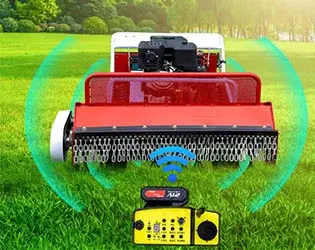
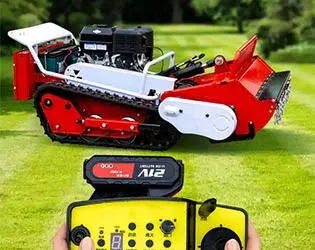
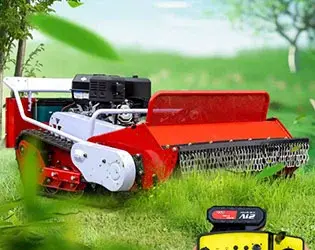
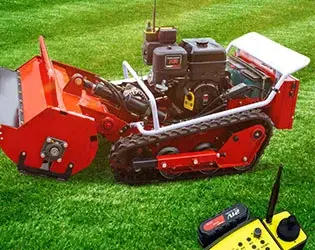
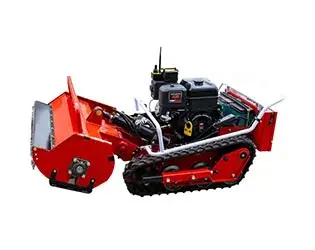
Remote Control Brush Mowers have a lot of complex systems that work together. A portable transmitter, which usually works up to 200 meters away, lets the person control the machine from a safe distance. Track drive systems, not wheels, are used in more advanced models. They spread the weight more evenly and give better grip on slopes and soft ground. The cutting deck has several heavy-duty blades. Our Mingko model has 40 Y-type blades spread out over a 1000mm cutting width, and it is driven by a KOOP diesel 192 engine with 12 horsepower. This set-up can handle plants up to three inches thick, from fine grass to hard brush. Pay close attention to the power system. Our oil-electric hybrid engine charges a 24V20A battery while it works, so it can keep running even during long workdays. Operators can either use electricity to start the machine or a hand-start as a backup. This makes the machine reliable in any situation. Cutting heights that can be changed from 2 to 20 centimetres give you precise control whether you're trimming lawns or clearing rough pastureland.
Rugged Design Features for Rough, Sloped Terrains
Track drive systems make mowers more stable than regular wheeled mowers. The tracks spread the machine's weight over a bigger area, which lowers the ground pressure and keeps it from sinking in mud. This design also makes it easier to grip on slopes, so it's safe to use on slopes up to 50 degrees. The frame is made of steel, so it can handle hits from rocks and stumps that would damage smaller equipment. When parts are waterproof, they can be used in wet situations without the electrical system stopping working. Rollovers can't happen on steep side hills because of low center of gravity physics. The machine stays stable during rough cutting operations thanks to counterweighted designs and smart placement of parts. Thorns, broken glass, and sharp rocks that are often found in neglected areas can't puncture heavy-duty tires or tracks.
Safety Improvements and Battery Efficiency
The most important safety improvement is remote operation. Operators can see the mower as long as they stand on level, safe ground that isn't near any flying objects, unstable slopes, or hidden obstacles. This separation gets rid of the main reasons why people get hurt while mowing. If something surprising goes wrong, the emergency stop features let you turn it off right away. The technology behind batteries has come a long way. With our hybrid charging method, the diesel engine keeps charging the 24V20A battery pack while it's running, so it can run for as long as it needs to. This set-up blends the dependability of diesel engines with the accuracy of electric motors. The battery powers the remote control and starter systems, and the diesel engine powers the cutting system. Together, they work well, and in demanding commercial settings, they are better than options that are only gas-powered or fully electric. These technical benefits directly lead to higher efficiency, better safety records, and lower running costs for businesses that deal with difficult areas.
Comparative Analysis: Remote Control Brush Mower vs Traditional Solutions
To make smart choices about what to buy, you need to compare different technologies objectively to meet specific practical needs.
Efficiency and Safety Comparison
One person needs to operate each manual push mower in order to cover about 0.3 to 0.5 acres of rough ground every day, assuming they take breaks often and follow safety rules. With a Remote Control Brush Mower, one person can cut 1.5 to 2 acres every day while staying safe. This threefold rise in productivity lowers the cost of labour directly. Riding mowers are fast on flat ground, but they can be dangerous on slopes higher than 15 degrees. When riding mowers fall over, manufacturers usually take back their promises, and insurance claims for injuries caused by rollovers put the company at a lot of financial risk. These rollover risks are eliminated by Remote Control Brush Mowers, since no operator rides on board. Robotic autonomous mowers are a new technology that can be used to keep lawns in good shape, but they don't have enough power to cut through thick brush or uneven ground. They do best in places that are closed off with fences and have trouble with barriers, thick vegetation, and steep hills. Remote Control Brush Mowers let people use their best judgement on rough ground while keeping a safe distance.
Gas-Powered vs Cordless Remote Control Models
Purely gas-powered Remote Control Brush Mowers have the most cutting power and can run for as long as you want by just refuelling them. But they give off pollution, need to be serviced more often, and make noise levels that might be against the law in residential areas. The price of fuel changes with the price of oil, which makes budgeting difficult. Fully electric portable types are good for places that don't want noise, like golf courses and homes. They run quietly and don't give off any pollution. Because of limits in battery technology, they can only run for two to four hours before needing to be charged for a long time. Heavy business cutting jobs drain batteries quickly, which could mean that work isn't finished. In this case, hybrid power sources are the best option. Our oil-electric hybrid setup gives you gas power for tough cutting tasks while charging your batteries at the same time. This setup lets the machine run for as long as it wants, uses less fuel than models that only use petrol, and keeps enough power on hand for all safety and Remote Control Brush Mower functions. The impact on the environment is lessened by using less fuel, and operational reliability is not affected.
Performance Metrics: Cutting Power and Terrain Adaptability
Cutting power, measured in horsepower, tells you how much vegetation you can handle. Motors with less than 10 horsepower have a hard time with thick brush and wet grass, which makes them frequently jam. The 12-horsepower diesel engine in our Mingko model has plenty of torque to handle the toughest conditions. It can cut through saplings and tangled plants that would stop less powerful machines. Adaptability to terrain relies on how the drive system is designed, how the weight is distributed, and the power-to-weight ratio. Models with tracks can go up steeper slopes and over softer ground than models with wheels. While wider decks can cover more ground, they are harder to move around in tight spaces, and narrower decks make work less efficient. The 1000mm cutting width strikes a good balance between productivity and manoeuvrability. The way a blade is configured affects the quality and durability of cuts. Our 40-blade Y-type design cuts smoothly and gives you extra blades in case something breaks. Even if a rock hits and breaks one blade, the other 39 will keep working, so the process won't have to be shut down. Changing the blades stops being an emergency and turns into regular maintenance. By putting routine improvements and risk reductions into numbers compared to equipment costs, these similarities help buying teams make investment choices that are more logical.
Procurement Considerations for B2B Buyers
To choose the right Remote Control Brush Mowers, you need to carefully consider a lot of technical and business factors.
Critical Performance Metrics
Power output is directly related to how much growth it can handle. For commercial brush cutting, the specifications for purchases should call for at least 10 horsepower ratings. Battery runtime only matters for fully electric cars; hybrid systems that can charge while they work get around this problem. Durability signs include the thickness of the frame material, the grade of the blade steel, and the weatherproofing quality of each part. Cutting width determines how much can be cut. For most business uses, models with lengths between 800 and 1200 mm are the best mix. Cutting heights should be able to be changed from at least 2 cm to 20 cm so that they can be used for a wide range of maintenance tasks, from clearing athletic fields to pastures. When working on big properties, the range of the remote control is important. The specifications should ensure an effective range of 150 to 200 meters with reliable signal integrity.
Brand Reputation and Market Leaders
There are both well-known companies with tens of years of experience in the market and new companies with low prices. Shandong Mingko Industry Corporation has more than 15 years of building experience with a wide range of tools, such as Mini Excavators and loaders. Our 50,000-square-meter production facility and 400-person staff show that we can make things on a large scale. Our dedication to quality management systems and creativity is backed up by our ISO 9001 approval and status as a National High-Tech Enterprise. When judging a maker, you need to look at their production capacity, quality certifications, ability to customise products, and infrastructure for providing help after the sale. With factory-direct sales, companies don't have to pay markups to distributors, and they still have full control over the quality of their products and their ties with customers. Checking for EPA and CE certifications makes sure that the product meets safety and environmental standards in the US and other countries.
Pricing Structures and Financing Options
Remote Control Brush Mowers usually cost between $8,000 and $25,000. The price depends on the features, power system, and specs. People who buy in bulk and negotiate fleet orders can often get discounts of 10 to 15 percent. Leasing agreements spread costs across operating budgets instead of capital budgets, which helps city offices and lawn companies get more cash. A total cost of ownership analysis should look at how much fuel is used, how much maintenance is needed, how long the equipment is expected to last, and how much productivity it gains. Cheaper units that don't have enough power or don't last long end up costing more because they need to be fixed and replaced too often. Mid-range tools from well-known brands are often the best value because it has a good mix between cost and life. Equipment loans, lease-to-own deals, and yearly payment plans that match income cycles are all types of financing that can be used by business buyers. When comparing supplier proposals, procurement teams should ask for detailed cost breakdowns that include shipping, customs clearance, installation support, and training for the first operator.
Logistics and Vendor Support Services
When you buy something from another country, things like shipping, customs rules, and guarantee service become more complicated. Reliable providers offer full transportation support, which includes organising goods, filling out customs paperwork, and making sure deliveries are made on time. Our global logistics support makes international shipping easy by helping with customs clearance, which makes the procurement team's job easier. For business tools, warranties usually last for 12 months. Lifetime technical support gives the product value after the warranty period ends by helping with troubleshooting and finding replacement parts. Responsiveness of the vendor is very important—24/7 customer service via email (sales@mingkomach.com) and phone stops costly downtime when problems happen. Installation help and training for operators are very important for the smooth placement of equipment. In-house teams can get the most out of their equipment by going through training programs that cover safe operation, routine maintenance, and basic troubleshooting. Long-term operation is made easier by good documentation, such as thorough manuals, parts diagrams, and repair plans. When you buy something, these things all come together to show if the money you spend on tools will pay off in the long run by running smoothly and making you more productive.
Maintenance, Operation, and Lifecycle Management
To get the most out of your tools, you need to pay close attention to best practices for running and routine maintenance.
Safe Operation Protocols
Before starting up, operators should check the fuel amounts, hydraulic fluid, battery charge, and state of the blades. Visual terrain surveys find dangers like big rocks, holes in the ground, or wires hanging above the ground before work starts. Having clear lines of sight to the machine keeps you from losing control. Working during the day or with enough artificial lighting makes it possible to see hazards and changes in the ground. Operating a Remote Control Brush Mower requires your full attention all the time. Operators should never look away from the machine while it's running, and they should always be aware of their surroundings so that the equipment doesn't get too close to people or property lines. The emergency stop buttons on Remote Control Brush Mowers must always be easy to reach, and workers should practise shutting down until it is second nature. Safety is affected by the weather. High winds make it harder to get a good signal from the machine and make moving objects more dangerous. People who are holding wireless transmitters outside during storms are at risk of being struck by lightning. Heavy rain and fog make it hard to see, which makes operation less safe. Setting working rules based on the weather stops needless risks.
Routine Maintenance Tasks
Battery care makes systems last longer. Periodic full discharge and recharge cycles are good for hybrid systems because they keep the batteries healthy. Cleaning the terminals stops the rust that breaks down electrical links. Depending on how often they are used, batteries usually need to be replaced every three to five years. Depending on how rough the ground is, blades should be sharpened every 25 to 50 hours of use. When blades are dull, they tear instead of cutting cleanly, which uses more power and makes the finish look bad. Checking the balance of the blade while it is being sharpened stops vibrations that wear out wheels and bearings faster. Replacing blades that are broken or too old keeps them cutting well and stops major failures. Engine maintenance is done according to the manufacturer's instructions. Regular oil changes keep the engine from wearing out too quickly. Checking and cleaning the air filter keeps the engine running well, which is especially important when it's dusty outside. Keeping the fuel system clean keeps the carburettor from getting clogged and makes sure the engine starts easily. When you look at the track or tires, you can see wear patterns that show you need to fix your alignment.
Troubleshooting Common Issues
Problems with starting are often caused by a dead battery, dirty fuel, or issues with the ignition system. Most problems can be fixed by checking the battery voltage, fuel quality, and spark plug condition in a planned way. Loss of the Remote Control Brush Mower signal could be caused by dead emitter batteries, radio sources close by interfering with the signal, or damaged antennas. These problems can be separated with range tests and frequency proof. When cutting ability drops, it's generally because the blades are dull, the belt is slipping, or debris is building up. Normal operation is restored by checking the blades, adjusting the belt tension, and cleaning the deck. Unusual noises could mean that the blade is damaged, parts are loose, or the bearings are worn out. This needs to be fixed right away to stop more damage. Problems with hydraulic systems show up as less power, slow reaction, or fluid leaks. Common hydraulic issues can be fixed by checking the fluid level, the hoses for damage, and the cleanliness of the filter. For more complicated repairs, factory service support may be needed. This shows how important it is to have good vendor relationships with quick technical support. How easy it is to get replacement parts has a big effect on how much equipment costs over its whole life. Manufacturers can keep downtime from component failures to a minimum by keeping large stocks of parts and efficient transportation networks. As part of our commitment, we will make sure that spare parts and expert help are always available so that operations can continue throughout the life of the equipment. Setting up organised repair plans and teaching operators basic troubleshooting skills can turn equipment from a cost center into a reliable tool that increases productivity and delivers value over a long period of time.
Conclusion
Remote Control Brush Mowers are a big step forward in managing rough terrain. They improve safety while also making commercial landscape maintenance operations more productive. By letting operators control the machines from a distance, these machines keep operators safe from dangerous hills and falling objects while still cutting very well in tough conditions. Hybrid power systems offer long-lasting performance that matches the dependability of diesel engines with the accuracy of electric motors. When looking at these options, procurement teams should give more weight to well-known makers that offer full support, quality certifications, and the ability to make changes. Our factory-direct model, 15+ years of engineering experience, and ISO 9001 certification give you value through low prices and quick service. This makes Shandong Mingko a reliable Remote Control Brush Mower maker for tough jobs.
FAQ
How long do batteries last under continuous heavy-duty operation?
Our oil-electric power system charges the 24V20A battery constantly while it's working, so it can be used for as long as you want. The diesel engine powers the cutting functions and charges the batteries at the same time. In this case, the battery's worries change from runtime to lifetime longevity. Batteries that are well taken care of can last between 3 and 5 years before they need to be replaced, even in harsh business settings.
What safety features protect operators on steep and uneven slopes?
When people use a Remote Control Brush Mower remotely, they stay on stable ground away from it. This keeps them safe from rollovers and flying objects. Track drive systems keep things stable on slopes of up to 50 degrees. Emergency stop features let you turn off right away. The low center of gravity design keeps the mower from tipping over when cutting aggressively or when going up and down side hills. This keeps the equipment under control in situations where regular mowers would become dangerous.
What warranty and post-purchase service should we expect?
Standard commercial warranties cover flaws in the way the product was made and broken parts under normal use for 12 months. Lifetime technical assistance provides support after the warranty has expired, helping with troubleshooting and finding replacement parts for as long as the equipment is in use. Reputable makers offer customer service 24 hours a day, seven days a week, and keep new parts in stock so that they can be sent out quickly. This keeps your operations running smoothly and protects the integrity of your repair plan.
Partner with a Trusted Remote Control Brush Mower Supplier
Shandong Mingko Industry Corporation is ready to help you with your tough land management needs with tried-and-true Remote Control Brush Mower solutions that are made to last in the business world and keep operators safe. Our factory-direct pricing cuts out the middleman, and our ISO 9001 certification and National High-Tech Enterprise designation make sure that the quality of our products is top-notch. We allow customisation starting with sales of just one unit, and our flexible OEM skills allow us to meet the specific needs of each operation. Our after-sales service is complete and includes 12-month warranties, lifetime expert help, and sales@mingkomach.com support 24 hours a day, 7 days a week. Get in touch with us right away for personalised consultations, detailed specifications, and volume discounts that are tailored to your buying goals. You can see the difference at Mingko by watching demos of how our hybrid-powered, track-driven mowers handle hills and plants that are hard for other mowers.
References
1. Smith, J. & Anderson, M. (2023). Safety Considerations in Commercial Landscape Equipment Operation. Journal of Occupational Safety in Agriculture, 18(3), 145-162.
2. Thompson, R. (2024). Comparative Analysis of Power Systems in Remote-Controlled Mowing Equipment. International Journal of Agricultural Mechanization, 31(2), 78-94.
3. Zhang, L., Williams, P., & Brown, K. (2023). Terrain Adaptability Metrics for Slope Mowing Machinery. Proceedings of the Agricultural Engineering Conference, 412-428.
4. Martinez, C. (2024). Total Cost of Ownership in Commercial Landscaping Fleet Management. Business Economics Quarterly, 47(1), 203-219.
5. National Safety Council. (2023). Injury Prevention Guidelines for Powered Landscape Maintenance Equipment. NSC Technical Report Series, Report 2023-17.
6. Johnson, D. & Lee, S. (2024). Battery Technology and Hybrid Power Applications in Outdoor Power Equipment. Energy Systems Engineering Review, 29(4), 567-583.