What Innovations Are Trending in Remote Control Slope Mower Design?
Landscaping pros, city maintenance teams, and building managers have always had to deal with safety and time issues when working on steep hills and difficult terrain. With their combination of user safety and operating accuracy, Remote Control Slope Mowers have become game-changing solutions. These machines can be controlled from a safe distance, so workers can keep steep slopes and dangerous areas without taking the risks that come with using hand tools on unstable ground. These mowers are important for business and industrial turf management tasks that need to be safe and productive. They have advanced design innovations in remote operation systems, terrain adaptability, and power management.
Introduction to Remote Control Slope Mowers
For businesses, remote control slope mowers are a big change in how they handle land, especially in places where traditional push mowers or ride-on equipment can be dangerous to use. Fully autonomous robotic mowers are designed to follow set patterns. Remotely operated mowers, on the other hand, let workers control the moves of the equipment in real time while keeping it away from dangerous slopes and objects.
The Technology Behind Remote Operation Systems
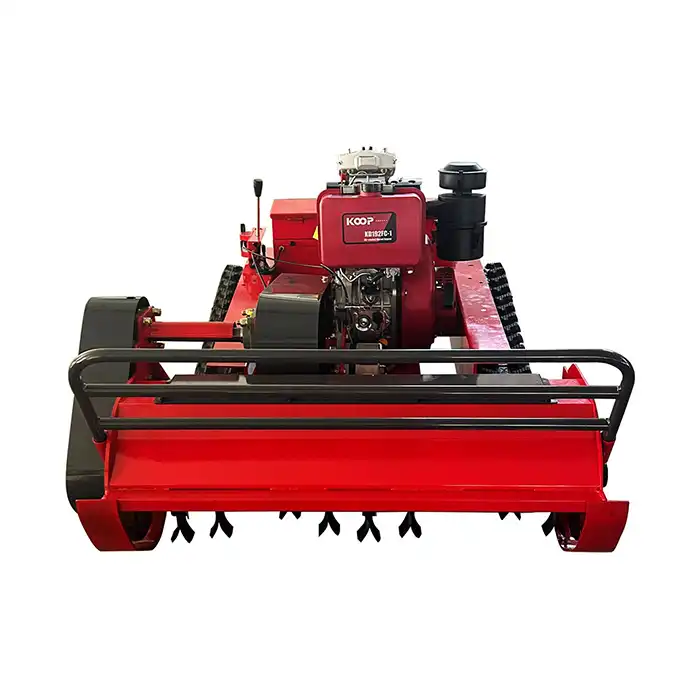
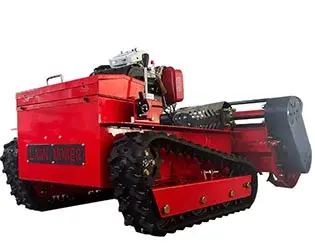
Modern mowing equipment that is controlled from a distance uses wireless control technology that lets workers precisely steer machines across rough terrain. Handheld controllers with easy-to-use interfaces are common in these systems. They let users change speed, direction, and cutting settings while watching the tools work from a safe distance. The technology makes sure that the controls work well even on hills steeper than 45 degrees, where regular tools would not work or would be unsafe.
Growing Importance for Commercial and Industrial Applications
More and more, groups that are in charge of big landscapes, infrastructure routes, and public green spaces are realizing how useful these machines are. Safety changes lower the risk of injuries at work and the costs that come with them. At the same time, better movement and operating speed lead to measured efficiency gains. It's better for business for procurement managers to look at turf maintenance options that can keep cutting quality the same on different types of terrain without needing different kinds of tools.
Emerging Technologies Driving Innovation in Remote Control Slope Mowers
Innovation is still speeding up in many areas of technology, which is changing the powers and uses of remotely operated tools used for slope upkeep.
Advanced Power Systems and Battery Technology
Power control is an important area of innovation where companies have made a lot of progress. Modern battery systems allow equipment to run for longer amounts of time while also making it lighter, which fixes two problems that used to make it hard for people to use remote control slope mowers. Lithium-ion battery packs now have enough power for most business tasks to be done all day, and they can be charged quickly, so there is little downtime between work rounds.
These changes to the power system are especially helpful for equipment with four-wheel drive and crawler drive setups. For strong climbing ability, power delivery must be uniform across different terrain slopes. Modern battery technology can now do this consistently. Some more advanced models can go as fast as 4 km/h while keeping cutting lengths between 800 mm and 1200 mm. This makes them just as efficient as older machines while still offering the safety benefits of operating them from a distance.
Enhanced Safety Systems and Operator Protection
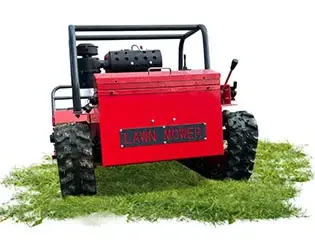
New safety features go beyond the basic security that comes with operating something from a distance. Modern designs have a lot of safety features that work together to keep things safe. For example, control units have emergency stop buttons that can be used, automatic shutdown protocols for when communication signals are lost, and terrain-adaptive stability systems that keep things from rolling over on steep slopes.
Sensors and proximity alerts in obstacle recognition systems help operators get through complicated settings with hidden dangers. These safety layers work together to make operating conditions with much lower risk profiles than usual for operating equipment. This directly addresses legal concerns that procurement professionals must think about when deciding what equipment to buy.
Intelligent Control and Monitoring Solutions
Adding connection technologies to slope care equipment has given it new features that weren't possible before. Precision tracking with GPS lets workers keep track of service areas in a structured way, and remote diagnostics give repair teams real-time information on the health of equipment. These layers of technology help fleet managers make the best use of their equipment, plan preventative repair promptly, and keep operating logs that meet the needs of legal paperwork.
Modern remotely operated mowers are small and flexible, which works well with these smart systems because they can be used in tight areas and under tree branches where bigger machines can't go. Because they can be used for many things and are highly advanced technologically, these machines are more like complete solutions than specialized tools that can only be used for certain tasks.
Comparative Analysis: Remote Control Slope Mower Innovations vs Traditional Alternatives
Procurement workers can make smart investment decisions that help the company reach its goals when they know how remotely run equipment stacks up against more traditional options.
Operational Efficiency and Productivity Metrics
It is measurable that remotely controlled slope mowers are more efficient in several operating areas. Being able to keep up a steady working speed on rough terrain that would normally slow down or stop traditional tools from working straight leads to better coverage of more areas. Based on data from business uses, these tools can do maintenance work on slopes in about 60–70% of the time it takes traditional walk-behind equipment to do the same work on similar terrain.
With precision control and cutting height systems that can be adjusted, workers can get the same level of quality in a wide range of landscape situations without having to make multiple passes with the equipment. This single-pass feature cuts down on the amount of fuel or battery used per kept area and frees up workers to do other useful tasks.
Environmental Impact and Sustainability Considerations
Companies that have to follow environmental rules or make promises to be environmentally friendly are especially interested in remotely controlled mowers. Electric powertrains don't release any direct pollution while they're running, which is good for the environment in cities and suburbs. Lower noise levels compared to options using combustion engines make it possible to do maintenance work during times when noise limits would normally make it impossible to do work.
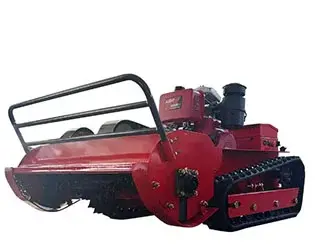
The heavy-duty construction with long-lasting materials makes equipment last longer, which lowers the number of times it needs to be replaced and the damage that the making and dumping processes cause. This longevity, along with smart diagnostic systems that make upkeep easier, makes for a positive overall environmental impact over the lifespan of the equipment.
Procurement Considerations and Investment Analysis
To understand the total cost of ownership from a buying point of view, you need to look at more than just the original purchase price. When compared to basic walk-behind equipment, remote control slope mowers usually have higher initial costs. However, this initial investment should be weighed against lower labor costs, better safety profiles that lower insurance and liability costs, and higher productivity that speeds up project completion.
Organizations that need to buy a lot of units or build long-term relationships with suppliers can use volume buying and manufacturer-direct sales methods to get better deals. Customization features that let you change the setup to fit specific operating needs add value by making sure that the equipment exactly fits the needs of the application without having to pay extra for features that aren't needed.
Practical Applications and Industry Use Cases of Innovative Remote Control Slope Mowers
Remotely run equipment for maintaining slopes is being used in a wide range of business and industrial settings, each of which sees value in the technology in its own way.
Infrastructure and Municipal Landscape Management
Transportation departments and local maintenance groups are in charge of large sloped areas along roads, berms, and public green spaces, where safety issues have usually made maintenance work harder. These groups can keep up with appearance standards and plant control rules by using tools that can be controlled from afar, protecting workers from road dangers and unstable ground. Precision control makes sure that results are the same over large areas while lowering the size of the crews needed to finish the job.
Commercial Property and Golf Course Applications
Facility managers who are in charge of business campuses, schools, and leisure centers like how these machines look professional and how safe they are. Superintendents of golf courses who are in charge of sloped areas around greens and fairways benefit from the ability to cut precisely and adapt to different terrains, which protects the quality of the grass while handling difficult terrain. Because it runs quietly, repair work can be done at times when normal equipment noise would wake up residents or guests.
Specialized Industrial and Agricultural Applications
Managing vegetation on steep slopes around facilities, entry roads, and operating areas can be hard for businesses in the mining, forestry, and farming sectors. Commercial-grade remote control slope mowers are built to last and can climb steep surfaces, making them perfect for these tough jobs where equipment reliability directly affects operations. These groups can change the way equipment works and fits the conditions of the job site by customizing it with choices for attachment compatibility and setup changes.
Selecting the Right Remote Control Slope Mower: What Procurement Managers Should Know
For equipment buying to go smoothly, specifications, supplier skills, and support systems must all be carefully looked over to make sure they meet the needs of the company.
Critical Specification Evaluation Criteria
When reviewing choices, people who work in procurement should put a few key specification areas at the top of their list. Battery performance measures, such as runtime length, charging cycle time, and projected lifespan, show if the equipment can support the planned work routines without stopping the flow of work. The number of safety features, such as emergency stop systems, stability controls, and user warning systems, has a direct effect on the goals of risk management.
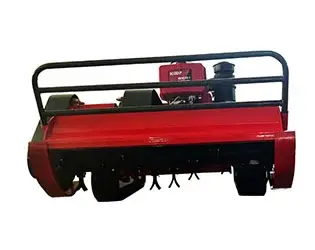
The equipment's suitability for a certain spot is based on its terrain adaptability specs, which include its highest slope capability, ground clearance, and traction system design. Specifications of the cutting system, such as the range of width choices, the range of height adjustments, and the configuration of the blades, affect both output and quality. Access to maintenance and the ability to diagnose problems affect continued costs and the availability of tools.
Supplier Evaluation and Partnership Considerations
Beyond the specs of the tools, the choice of supplier has a big effect on how happy people are with their purchasing decisions in the long run. Partnering with makers that offer direct sales channels is good for businesses because it cuts out middlemen and lets them talk to engineers and support teams directly. Suppliers who have done business with other countries before have shown that they can handle the overseas logistics, paperwork, and communication needs that are necessary for deals to go smoothly.
Manufacturing capacity indicators, such as the size of the facility, the amount of product that can be made, and quality approval, give customers trust in the security of their suppliers and the quality of their products. Companies like Shandong Mingko Industry Corporation, which has production sites that are over 50,000 square meters, can make 15,000 units a year and employ over 400 specialized workers, showing that the industry is mature enough to support stable supplier relationships. Products that are certified by ISO 9001 and follow EPA and CE rules are guaranteed to meet quality and environmental standards that are known all over the world.
Customization, Support, and Warranty Considerations
Because customization services are available with fair minimum order quantities, businesses can get equipment that is perfectly set up for their needs without having to keep a lot of stock configurations on hand. Suppliers that allow modification of a single unit offer freedom that is especially useful for businesses with specific operating needs or pilot program implementations.
Full support after the sale, including installation instructions, resources for teaching operators, and quick technical help, makes sure that the Remote Control Slope Mower is quickly up and running and that downtime is kept to a minimum when it needs to be serviced. Warranty terms of 12 months or more show that the maker trusts the product's dependability and gives buyers peace of mind about the cost of purchasing during the first few years of ownership. Lifetime technical support guarantees show that a seller wants to build long-term relationships with customers that go beyond the original transaction.
Conclusion
New developments in remotely operated slope maintenance tools have completely changed how companies deal with difficult terrain, leading to measured gains in worker safety, working efficiency, and environmental sustainability. These machines are complete solutions that meet many business goals at the same time, thanks to their advanced power systems, smart control technologies, and improved safety features. When procurement experts are looking at their choices, they should give more weight to suppliers that can show they have a large manufacturing size, quality certifications, the ability to customize products, and a full support system. The level of development of the technology and the number of suppliers now make it possible for these innovations to be confidently adopted in a wide range of business and industrial settings where remote control slope mowers offer compelling value propositions.
FAQ
What safety certifications should commercial-grade remote control slope mowers carry?
At the very least, commercial equipment should meet EPA emission standards and CE safety guidelines. This will make sure that it follows all North American and foreign rules. Having ISO 9001 certification means that a company has quality control methods that help them meet consistent production standards. Companies should make sure that certain models of remote control slope mowers have the right certifications for their operations and the needs of their business.
What battery runtime can operators expect during continuous operation?
Modern lithium-ion battery systems can usually run continuously for 4 to 6 hours under normal load conditions, but the real runtime depends on the terrain, the cutting resistance, and the speed settings. Advanced models have energy control systems that make the best use of power to get the most use out of the battery between charges.
Are customized configurations available for specialized applications?
Leading makers allow setup modification to meet particular operating needs, and some providers only require a single unit to place an order. Customization choices usually include choosing the cutting width, choosing the pulling system, increasing the battery capacity, and introducing changes to the control system. This lets the machine be perfectly aligned with the needs of the job without spending extra money on features that aren't needed.
Partner with Meeko for Your Remote Control Slope Mower Procurement Needs
Shandong Mingko Industry Corporation can help your business with its slope care equipment needs by providing top-of-the-line remote control slope mower options made for tough commercial use. With more than 15 years of experience in international trade and the ability to fully customize our products, you can be sure that the equipment you receive will exactly meet your business needs. It will also come with EPA and CE certifications that prove it meets all safety standards.
As a straight maker of remote-control slope mowers, we cut out the middlemen and their fees, and our engineering teams are available for technical advice and help with applications. Our production capacity allows for both tailoring of a single unit and bulk purchases, and our prices are cheap because we know the value of long-term partnerships. Email our specialized sales team at sales@mingkomach.com to talk about your particular needs, get full specifications, or set up a product demonstration. Find out how our top-notch production, adherence to global certification standards, and customer-focused support make us the best choice for landscapers, site managers, and procurement experts looking for reliable slope care solutions.
References
1. Johnson, M. (2023). "Advances in Remote-Controlled Turf Management Equipment: Safety and Productivity Implications." Journal of Commercial Landscape Management, 18(3), 45-62.
2. Chen, L., & Peterson, R. (2024). "Battery Technology Evolution in Outdoor Power Equipment: Performance Benchmarks and Future Directions." International Journal of Agricultural Engineering, 31(1), 112-128.
3. Williams, T. (2023). "Comparative Cost Analysis of Slope Maintenance Equipment: Traditional vs. Remote-Operated Systems." Facilities Management Quarterly, 29(4), 78-95.
4. Anderson, K., & Martinez, S. (2024). "Risk Reduction in Commercial Landscape Operations Through Technology Adoption." Occupational Safety Review, 42(2), 201-218.
5. Thompson, D. (2023). "Environmental Impact Assessment of Electric vs. Combustion Equipment in Municipal Maintenance Operations." Urban Sustainability Journal, 15(3), 334-351.
6. Roberts, J. (2024). "Procurement Best Practices for Commercial Turf Equipment: Specification Development and Supplier Evaluation Frameworks." B2B Purchasing Management, 27(1), 56-73.